Thursday, May 25, 2017

KTMB Locomotive Class 22 at Gemas

Use only with permission
Loco Class No. 22, Gemas

May 2017. Gemas was the pulse of Peninsula Malaysia's railroad networks, and the train station was a popular stopover for many travellers from Kuala Lumpur and Seremban planning a trip to the East Coast and vice versa. 

One of the reliable iron-horses which served these two railway lines then was Locomotive Class 22. 

Today, visitors to this quaint railway town can find the trusted diesel powered machine on static display next to the old train station.  Interestingly, it is parked on the same iron roads which once linked Tanjung Pagar in Singapore to Bangkok but now sadly, they are left for scraps. 

Use only with permission
Short stretches of the old iron road are preserved.

Use only with permission
Loco No. 22 is the main draw at Gemas station.

Use only with permission
Next to Loco No. 22 is an old Gemas Signboard.

Use only with permission
A refreshing look at the narrow gauge line.

Wednesday, May 24, 2017

Railroad Crane at Gemas Train Station

Use only with permission
A pleasant railway gem in Gemas.

Use only with permission
Precious train artifacts.

May 17, 2017 Gemas. A short walk from the old train station is a railroad crane from the British era. A quick check shows that the crane is self-propelled made and the accompanying wagon next to it could be the main power source to move the crane.

Gemas in its hey days was an important railway hub in Peninsula Malaysia, and this special role vehicle could have played vital roles in the nearby train yard, or when there were breakdowns or emergencies along the lines.

Use only with permission
A view overlooking the old wooden train station and the
new structure which now serves ETS and the regular KTM services. 

It's a pleasant surprise that efforts are taken to preserve the old wood built Gemas station and to put a few preserved rolling stocks on the rusted tracks. Together they go a long way to create a refreshing perspective for visitors to appreciate train heritage in Malaysia.

 On the down side however, more could've been done to ensure they are getting the necessary protection from hostile Malaysian elements, and to elevate this historically rich train hub to its rightful status for the benefits of generations to come.

Use only with permission
The Malaysian authority should step in to preserve these railway relics
 before they are destroyed by the elements.

Use only with Permission
The Old Sign which has seen better days.

Saturday, July 6, 2013

Kinta Tin Mining Museum - A Tin Treasure Trove of Kampar

Kampar Tin Museum - A treasure trove.
July 2013. Kampar was once a thriving tin mining town in Perak but the slump in tin price in the world market in the 80s quickly put a dramatic end to its illustrious past. Over two centuries, the town was synonymous with this precious mineral and all walks of life in this quaint Malaysian town revolved around tin and tin mining.

The Kinta Tin Mining (Gravel Pump) Museum is an excellent location to retrace and have a glimpse of the scale of tin mining industry and to know better the people who once worked in the open-cast mines.

It's currently Malaysia's foremost and dedicated museum featuring the rich tin legacy in this country.
The elephant which first discovered the rich tin deposit of Kinta Valley

A Model of Palong - The Heartbeat of Tin Mines

Another attribute of this museum located in Bandar Baru Kampar (next to the Petronas Station and within the vicinity of the Grand Kampar Hotel) is its humble origin.  The museum was a brainchild of a tin tycoon who was keen to showcase the gravel pump mining method which was widely applied in the Kinta Valley during its hey days.

The museum which consists of two main galleries also serves as a tribute to local tin miners who took up the backbreaking work to earn a decent living and I believe also for those who made the ultimate sacrifices when they became victims when the gravel walls collapsed or the water retention pool burst.

Women work in palong to retrieve loose tin particles

Women play vital roles in mine camps.  They cook meals even after a hard day in the mines.
Your journey to this private museum starts when you are greeted by an elephant sculpture to mark the early chapters of this country's love and hate affairs with tin.

Many of the exhibits and information in the two galleries(each the size of a basketball court) are appropriately spaced and provide a conducive environment to know the subjects intimately.

The mannequins both indoor and outdoor are also perfect to illustrate the life of tin miners working in the dangerous mines. However, I find that the miners lookalikes could benefit more from a bit of imagination from the part of the curators.

Bearing in mind that entrance to this private museum is free (donations are welcome), I must add that the quality of the exhibits and information inside stand on par if not better than most other well-funded museums in this country.

Tin Ingots 

A Gravel Pump

Powerful Water Hose to break down the earth wall in tin mines
Young visitors to the tin museum are likely to be fascinated more by the life-size dioramas featuring real heavy mining equipment from now defunct mines.  They are found around the main exhibition halls, unfortunately, some are rusting away under Malaysia's hostile elements.

The captivating dioramas depict well the gruesome tasks both men and women of Kampar must face when they are out clearing new lands to find the precious mineral.   Look further and you could still heard the loud roars from the iron beasts and shouts from the mining crews cutting and digging every inch of the earth to look for tin.

The Tin Mining Museum despite its size and its lack of sophisticated exhibits, is in my opinion, has attained remarkable success in shouldering and safeguarding the tin mining legacy for the generations to come.  

If you're looking a museum to know Malaysia's proud history, this is the place. It  will get your thumbs up too as a place for your family to have both fun and educational outing and to discover the Kampar's rich Tin Legacy.

Entrance to Museum 

Friday, July 20, 2012

Scorpene - Malaysia Silent Killer


A sneak peek at Malaysia's silent killer and its answer to the growing threat in the South China Seas.  When the Malaysian King went for a ride on the sub, the Chinese wasn't very happy about it.

Pulau Layang-Layang - Gem or Curse?


This little Malaysian Isle has more birds than humans calling it home, but at any moment now, it would turn into a potential flashpoint in a regional power grab.  According to the navy guys we spoke to, this remote outpost -located 175 nautical miles from Labuan in the waters of Malaysian shores - has many 'visitors' but they come mostly in their submarines. (Chinese & the US Navy were the regulars).

Thus it comes as no surprise that some of the daily routines for Malaysian sailors stationed in Pulau Layang-Layang involve training their cannons out to the sea.  Frame this picturesque island in your mind now before it disappears in a big ball of fire.

Thursday, July 29, 2010

Khoo Boo Chia Embarks on a New Museum project in Thailand

Khoo Boo Chia, the former curator of Penang Museum is currently embarking on a new museum project in Hadyai in Thailand.

We are told that he is spearheading a dedicated team to establish a new Peranakan Museum in Thailand's southern province. This project is his second after his success at creating the mini museum in Penang's Khoo Kongsi.

Khoo has also informed Malaysiaheritage that the Hadyai Peranakan Museum will to open its door to visitors in December 2010.

Wednesday, July 28, 2010

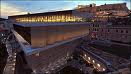
Acropolis Museum


A fascinating write-up on Acropolis Museum written by Kenneth Baker (San Franscisco Chronicle).
Athens - — Designing a museum figures nowadays as a rite of passage in the careers of many celebrity architects. New York's Bernard Tschumi faced an unusually stern test in this vein after winning a competition in 2001 to build the New Acropolis Museum.


For starters, he and Athens architect Michael Photiadis had to contend with house ruins - dating from the fourth to seventh centuries A.D. - unearthed on the museum site, about 1,000 feet southeast of the Acropolis and its crowning fifth century B.C. relic, the Parthenon.

Tschumi's solution, intricately worked out in cooperation with archaeologists and preservationists, was to suspend the entire building on 43 carefully positioned columns, leaving the ruins beneath exposed to view and, eventually, to visitors.

Second, and more daunting, Tschumi had to establish an appropriate architectural connection with the Parthenon, a structure justly regarded as a lodestar of Western culture.

He did this by setting the glass-clad gallery of Parthenon sculptural fragments on top of the New Acropolis Museum, in plain view of the temple's remains on the adjacent "sacred rock." The gallery duplicates the footprint and orientation of the Parthenon, so visitors encounter the sculptural fragments on view in the relationship they would have had when the Parthenon was intact.
Museumgoers can step closer to these nuggets of classicism than their original position, elevated on the building's frieze and pediments, would ever have permitted.

With its survey (on a lower floor) of archaic sculptures excavated on the Acropolis, and its dramatic mirroring of the Parthenon, the New Acropolis Museum makes a standing argument for repatriation of the so-called Elgin Marbles, the largest and finest remnants of Parthenon sculpture, prize treasures of the British Museum since the early 19th century.


Thomas Bruce, the seventh Earl of Elgin, served as British ambassador to the Ottoman Empire, which by then had ruled Athens for more than three centuries. His diplomatic standing enabled him to purchase and export to Britain about half of the surviving fragments of Parthenon sculpture.

In entrepreneurial terms, Elgin's venture proved disastrous to him, but arguably it did keep the classical treasures safe during some of Athens' most tumultuous modern decades.

In the early 20th century, in compensation for what looks like plunder in post-colonial perspective, the British sent to Athens plaster casts of metopes from the Parthenon frieze that Elgin had removed. These now form part of the New Acropolis Museum's Parthenon gallery display, their plaster whiteness contrasting - reproachfully, to those aware of the controversy - with the marble warmth of the surviving originals.

However the ongoing controversy shakes out, Tschumi succeeded wonderfully in his stated aim of making a museum of "concrete, marble, glass and light."

Monday, July 19, 2010

MAEKLONG TRAIN MARKET


70 km west of Bangkok lies the Maeklong Train Market, a favorite spot with train spotters. Here the traders will go about doing their business next to a railway line. The market is popular with locals who want fresh produce at an affordable price.

However five times in a day, the seemingly organized situation in the market will abruptly change whenever a train from Bangkok arrives.

Traders have learnt to adapt to the trains and they have adapted some clever improvisation to their make-shift stalls. Wheels are attached to the table and canopies are fixed with removable bamboo poles to allow a quick escape from disaster when the train chugs alongside within inches from their stalls.

The Thai Railway Authority makes a decent profit from this arrangement and charges each of the stall owner 30 Baht or US$1 rental to trade along the railway track.

Locals will tell you that they have no qualms doing business next to the train track but every now and then, there will be casualty namely involving mainly those over enthusiasts foreign visitors with their cameras.

Saturday, April 10, 2010

Melaka TLDM museum


Last Feb (2010) we went to a museum so called TLDM .Althougt we had to pay entrance fee the money was quiet worth it .(RM 3 FOR ADULT RM 1 FOR CHILDREN) SO I hope you'll enjoy your trip and you will think what I say is true.(This museum is just for display please do not try to steal anything.)

Tuesday, September 22, 2009

Sokcho Squid Sushi Paradise.

Situated on the north eastern coast of South Korea, many visitors often give this coastal city a miss when they come to this part of the country. Many have only one aim - to head to the nearby hill resort -Seoraksan.

We were pleasantly surprised with what Sokcho has to offer when we decided to leave Seorak-dong and spent a couple of days there on September 22, 09.

We desperately wanted a change from the regular, and pricer kimchi based stuff they offered at Seorak-dong, thus Sokcho easily become the obvious choice when it comes to looking for a more delightful choices of Korean food and value for money.

We found the harbor to be a seafood paradise.

If raw squid sushi catches your fancy, then head to the Marine Police base across from the City Hall. There, twenty something squid stalls are operated by mostly women. They will sell you 4 giant squids from W10,000, but you need to bargain hard.

Apparently September is the peak harvest season for squids. The locals too come in full force to fish for squids and you can watch them engage in their favorite past time not far from these makeshift stalls.

When you have agreed on the price, they will net the squids fresh from special water tanks and slice them into pieces using knifes and special squid shredder. All these are over in just a few minutes.

The dish come with tiny onion cuts and green chilles on top of the servings and a packet of spicy red sauce which is extra W1000, and there you'll have your fresh squid sushi. You eat Sokcho sushi by taking the cut squid in a paper cup and mixing it with the hot sauce.

There are also unforgetable seafood delights at the edge of the port near the lighthouse and the Sokcho pavillion. The building housing the sushi foodstalls are located opposite the pathway to the pavillion and it is a short walk from the large parking area to the far end near the massive tidal breaker.

You can order the meals from many fresh seafood sellers downstairs and you enjoy the meals upstairs overlooking the inner harbor.

The services are fast and friendly and you know it is a good place to enjoy food when the locals head there too.

Anyone who loves seafood should seriously consider making a stop at Sokcho.

Miss Kim Chol Yeon from the local tourist office who mans the tourist booth just outside the Sokcho Express Bus Terminal is a great help if you have just arrived in Sokcho and need information.

Monday, June 29, 2009

Penang welcomes British Helicopter Carrier.

History was made in Penang when Royal Navy helicopter carrier - HMS Ocean -L12, anchored in the Pearl of Orient for the first time on June 18, 2009.

The Penang stopover is a welcome respite for Her Majesty ship and her thousand plus crew who have just returned from a tropical war game at their favorite army camp in Brunei.
Needless to say, the arrival of the HMS Ocean brought much excitement to the otherwise mundane ferry terminal in Butterworth. However, the sight of the warship gets more profound if one could grab the opportunity to view it from the iconic ferries plying across the narrow Penang Strait.

It is from the ferry, one can appreciate the full scale of the carrier. The 208 meter long floating airfield dwarfs over everything nearby at the wharf.

However, all eyes are quickly drawn to the Sea Kings and Chinooks on board the Amphibious Assault Ship.

Another spectacular feature of the warship is the cutting edge military hardware packed with awesome firepower. The most noticeable lot is the Phalanx CIWS - the state-of-the-art anti ship missile system positioned at the HMS Ocean’s bow and helm. I saw only two Phalanx units on board although Wikipedia notes there are three.

The ship is currently on a month long journey back to their home base in Plymouth.

Quite expectedly, the arrival of the British warship captured the headlines in the local press. The Penang based Chinese daily Kwong Wah Yit Poh ran a special feature on the event (June 18, 2009 edition; see attached photo) and the news also went national on Starmetro (Warship docks in Butterworth, June 25, 2009)


Tuesday, June 2, 2009

Ex-Penang Museum Curator Gets Thumb-Up for Project

Penang conservationist Khoo Boo Chia, shows why he is still the best in his league when his latest museum project at Leong San Tong Khoo Kongsi received rapturous applauses recently. (The Starmetro, Rich history of a clan, May 27, 2009)

Khoo, the former Penang Museum curator, grabbed the headlines in 2006 (The Sun, March 24, 06 ) when he was forced to vacate his post in Penang Museum after he fell out of favor with the then Penang BN councilman holding the cultural and heritage portfolios.

Although Khoo was not formally blamed for any wrongdoings, it was an open secret that the vocal politician from UMNO was not pleased with Khoo and his work at the state museum.

According to reliable sources, Khoo was ‘guilty’ of failing to use his good office to project Penang’s multi cultural facets in the museum. The exhibits in the state museum was deemed too pro-Georgetown which is prominently Chinese and lacked features of Malay majority in Prai.

Hence, he was axed and replaced by his then young and inexperienced assistant curator.

Fortunately, the 2006 fallout has turned into a blessing for Khoo and he could devote himself wholeheartedly to the preservation of Georgetown historical enclave without having to make consensus or - worst - being labeled responsible for cultural balkanization in the Pearl of Orient.

In just a short span of a few years and the verdict is out.

Today, Khoo’s fate has been redeemed and he has proven that he is a force to be reckoned with in the field of preservation and heritage conservation.

He has left many of his personal imprints in the RM400,000 project to refurbish Leong San Tong Museum, and it could pose serious challenge to the State Museum as the next must-see heritage site.

In this bizarre twist of fate, the state has now taken a keen interest in Khoo’s latest work and it has gone so far as to proclaim the site as its next biggest treasure chest.
The icing of the evening for the former Penang Museum curator is when he got the thumb-up for his work from the Chief Minister of Penang when the latter turned up to grace the opening.
(All Photos are sourced from Penang Tourism and Khoo Kongsi websites)

Monday, June 1, 2009

Pulau Ketam's Watery Playground.


The waters around Pulau Ketam are a natural playground for the children of this Chinese fishing community in this mangrove filled island.

Unlike their peers from the city, the Pulau Ketam kids have a very different idea of having fun and find sliding or swinging at the neighborhood park a yawn.

There was a hive of activity when the tide was at its highest at about six in the evening.
A group of boys, about five of them wasted no time for some eye-opening activity from the village's main bridge.

While they seemed to throw caution out of the window, the boys certainly have a great respect for motorized boats, pausing until each boat has passed.

However, they will stop at nothing when having fun. Not even when they spotted a jelly fish under the bridge but that did not deter their enthusiasm to dive.

For hours till dusk filled the air, they dared one another to take the next plunge into the murky waters. When they jumped, they often screamed out loud the names of girls they fancied and it makes me wonder if their diving and shouting says something about adult relationship.

Right- girl swimming from door front.

Further downstream, the younger ones also took to swimming with great ease.

A few households have children some as young as five or maybe less frolicking in the waters. All they have is a small floating device on their arms but that's basically all.

Despite swimming close to the busy waterway, these kids have no qualms about the danger lurking nearby and seemed to enjoy their wet play time right in front of their doorsteps.

Thursday, May 21, 2009

Lou King Howe Memorial Museum

LOU KING HOWE Memorial Museum is a tribute by Sibu residents to a philanthropist whose name is synonymous with remarkable stories of early settlers in this predominantly Foochow community in Sarawak.

Lou, a successful rubber planter of his time, had donated generously to the set up of a modern medical facility to help improve the lots of many folks from all backgrounds when malaria and other deadly tropical diseases were ravaging the entire population.

Lou now has his name forever enshrined in history.

Through the initiative by Sibu elders, the disused hospital was given a fresh coat of paint and has since embarked on a new journey as a memorial dedicated to Lou cum a museum showcasing the health services from a bygone era.

Other communities in Malaysia can learn a thing or two from Sibu about honoring pioneers and leaders but stop short of trumpeting over the figurehead.

Unfortunately, many Malaysian museums tend to have a habit of positioning themselves exactly in the opposite. These museums often under the domain of the respective states are used as platforms to score political mileages.

Too many honorable figures from a spectrum of Malaysian backgrounds and their sacrifices, both for their community and to some extent this country, have for too long sidelined and now risked losing forever in time because they don’t fit into somebody’s agenda.

Sibu is a hard act to follow but their approach can be the yardstick in how we promote bias free Malaysian heritage.

If Sibu museum can succeed on the initiative of its residents, and at the same time doing a fairly impressive job of showcasing its tumultuous past, then the key players in Malaysian conservationist circle should get their act together and approach heritage in a wholesome and polarized-less atmosphere.

See enclosed write-up

Sarawak's First And Malaysia's Biggest Medical Museum Will Be Ready In July (Bernama, March 14, 2008- Edward Subeng Stephen)

Come July, Sarawak will have the distinction of being home to its first, and the country's biggest medical museum. Known as the Lau King Howe Memorial Museum, it is the brainchild of a group Chinese businessmen who are descendents of early settlers to the state. The museum itself, is named after one of the early Chinese settlers, Lau King Howe.

The new museum will occupy the original main building of the former Lau King Howe Hospital in Lau King Howe Road near the Sibu Town Square."It will be another attraction to the town and will probably be the biggest of its kind in the country," said Urban Development and Tourism Minister Datuk Sri Wong Soon Koh in a recent interview with Bernama.

He said the project was a joint effort of town leaders, United Chinese Association and other non-governmental organisations, Sarawak Museum, health department, Sibu Municipal Council and public works department."As a matter of fact, two NGOs namely, Confederation of Pan-Chen Lau Association, Sarawak and the Sibu Kwong Yuen Benevolent Association have each contributed RM300,000 towards its restoration works," he said.

According to Dr Hu Chang Hock, who is chairman of the local branch of the Malaysian Medical Association, the museum "is designed to remember, perpetuate and propogate the spirit of Lau King Howe, his sincerety, benevolence, generosity and his profound love for the sick, poor and disadvantaged."
He said the late Lau King Howe, who was a trained teacher and a pious Christian, arrived from Foochow, Fukien in China in 1916, to manage a rubber plantation here. Before returning to China in 1930, he decided to donate all his properties to the then colonial government to set up the town's first modern hospital. Completed in 1936 at a cost of RM82,000, the hospital was named after him.

On Aug 31, 1994, when the new government hospital at Oya Road was completed and began operations, Lau King Howe Hospital ceased operations. Dr Hu said the museum, the first of its kind in the state, "will attempt to illustrate the changing pattern of infectious disease such as diptheria, malaria and tuberculosis spectrum in their prominence in the 1930s to the 1950s, to the present prevalent chronic disease such as diabetes mellitus, hypertension, heart disease and others."

"It will also try to illustrate the progress of medicine from the exhibits of age-old reverent equipments of the former Lau King Howe Hospital to the pictorial illustration of modern equipments available at the Sibu General Hospital. "It will highlight how far we, in Sibu, have came to acquaint and adapt to the new advances in tools of medical applications," he said, adding that the exhibits would be changed frequently to enable the museum to be lively and vibrant.

Monday, May 18, 2009

Muzium Gopeng - Old Mining Town Honoured.

(Photos courtesy of The Star)
Museums in Malaysia are given a fresh new breath of air recently when a group of friends decided to join hands to start a thematic museum in former tin mining town of Gopeng.

In my view, this privately-run museum has the potential to outshine “state run” muzium because of the wealth of information in its collections.

Most if not all the artifacts in Gopeng Museum are personal collections passed down the generations.

Furthermore, home grown museums are often a labor of love for the few bold individuals who value heritage, and their passion for history compensates whatever is lacking in these small museums.

Gopeng Museum should also be jointly promoted with the Tin Dredge museum (T.T No. 5, photo on the left), another privately run museum in Tanjung Tualang as the country’s foremost repository of tin mining history.

Together, these Kinta Valley based museums will offer visitors and historical bluffs a glimpse of the valley’s industrious past and a startling introduction to the world’s most successful tin mining story.

Old mining town honoured (The Star, May 16, 09/ FOONG THIM LENG)

Inspired by the 2006 American animated feature film Cars, successful businessman Bernard Yaw has set up a museum in his hometown, Gopeng, in Perak.

Muzium Gopeng, opened on April 18 to coincide with World Heritage Day, is located in his ancestral home at 28, Jalan Eu Kong.

Cars, the animated film, is a story about an old sleepy town, Radiator Springs, which was once a popular stopover along the infamous US Route 66.

Successful entrepreneur Bernard Yaw who founded the Muzium Gopeng.

However, with the construction of an interstate freeway US-15, cars and trucks no longer need to patronise the small town’s businesses and services and simply bypass the town to rush to Los Angeles or Las Vegas, thus causing a major economic and financial slowdown for Radiator Springs.

As the story goes, one Sally Carrera, a beautiful 2002 Porsche 911 from California, grows tired of life in the fast lane and wants a new start in the small town, so she makes Radiator Springs her home. She runs the only auto motel there and is the one most dedicated to preserving and reviving the town with the hope that one day, it will get ‘back on the map’, and it succeeds.

The story reminded Yaw, the director of Dubai Ventures Group Sdn Bhd, of the reality faced by Gopeng and other similar towns along the North-South Expressway.Yaw recalled the time when the tin mining industry collapsed in the 1980s, residents from Gopeng and nearby towns were forced to venture elsewhere in search of greener pastures.

He himself left in 1980 for tertiary education in the United States and after graduation, he used to travel to New York city as part of the demands of his job and he would visit Chinatown’s famous Canal Street. “I could hear the Manglish and the Jen Shen Hakka spoken there,” he said. “The local Chinese residents there even regarded Canal Street as Kopisan Street. Many Gopeng folk made their living in restaurants there to send money home,” he said.
During his 20-year stay in the US, Yaw said his heart and thoughts were always with Gopeng.

The idea for the museum cropped up during a few rounds of lai fun (rice noodle) and local coffee sessions in the town by Yaw and a group of friends a few months ago.

“Like many of us who were born and raised in Gopeng, we loved the former hustle and bustle of this town. “We savoured the simplicity of life in Gopeng, without the Internet, Gameboys and iPods.

“We were all just simple, honest, frugal and conservative Gopeng folk,” he said.

He loves the simplicity of little towns where everyone is kind and generous and where the food is freshly made and the air clean.

“We decided to form Muzium Gopeng as we have a strong common desire to share the rich legacies of Gopeng and to bring about its revival,” he said.

Yaw restored the ancestral home that was built in 1882 by Eu Kong, the founder of the famous Chinese medicine company Eu Yan Sang. It was leased for 99 years to Yaw’s great-grandfather Yaw Mun Chong who came from the Hakka Dapu County in Guangdong Province in the early 1900s to set up a sundry shop in Gopeng. Yaw bought over the house in 1999. Five generations of Yaws had grown up in the house.

Muzium Gopeng is now under the care of the Gopeng Museum Management Society’s ad hoc committee headed by Yaw.

The society’s secretary Phang See Kong said there were over 300 artefacts on display including clocks, radios, typewriters, tools, weighing scales, household items, kitchen utensils, decorative platters, glass jars and ceramic urns, coins and currency notes, pens, lighters, torchlights, watches, ceremonial items and silver belts.
Phang said most of the artefacts belonged to treasurer Wong Kuan Cheong.

Another interesting display is a gallery of photographs on important people and incidents in Gopeng over the years, said Phang, a retired teacher.

Phang said Gopeng was a pioneer town in the Kinta Valley dating back to the early 1850s. He said the museum had attracted over 2,000 visitors from all over the country and also tourists over the past few weeks.

Perak Heritage Society president Law Siak Hong said there were opportunities in heritage waiting to be tapped. Already, eco-tourism in the jungle nearby has made Gopeng a popular destination.

“This history centre will attract more visitors to town,” he said.