
Foo Yee Ping - yeeping@thestar.com.my, the columnist of ‘Tale of Two Cities’ (The MetroStar, Fridays) writes regularly about museums with updates on events and exhibitions in the museums.
Unfortunately, the writer is New York based, thus her domain is mainly American museums.
Yet, Yee Ping’s ‘Tale of Two Cities’ makes a good reading and her weekly contributions offer Malaysian readers some fascinating ideas and concepts introduced in megastar museums i.e Guggenheim Museum, Whitney Museum of American Art etc.
These award winning institutions are an integrated part of the American social fabric and the exhibitions are the best in their league. It is not uncommon to find visitors from all ages making a beeline to see awe-inspired collections. Statistically, the US has some of the highest museums per capital in the world yet more Americans are visiting museums from the years before.
However, now that its economy is in near shambles, American museum operators must up the ante to entice new visitors and keep the regular ones.
Some innovative promotions include ‘Pay-What-You-Wish’ Day to help boost museum traffic. On these selected days, visitors have the option to tour the museums by making donations instead of paying the average US$15 (RM40) admission.
The Holocaust Museum in Washington DC for example chose instead to have free admission for its main exhibition hall and charged admission only for specially tailored exhibitions.
Getting Malaysians to visit museums was never an economical issue. Most are public funded and admission is next to nothing. The pertinent issue confronting Malaysian museum operators is more of the negative perception Malaysians have about our museums. If they are serious about their roles, they may well learn a few tricks from Yee Ping’s 'Tale of Two Cities’.
Friday, November 14, 2008

Thursday, November 13, 2008
Dennis Fire Trucks - Macau Fire Fighting Legacy
Two Dennis fire trucks with license plates- M-01-25 & M-01-27 - greet visitors at the main hall of the Macau Fire Services Museum. (Address - Estrada de Celho do Amaral, Free Admission)
The museum which still goes by its colonial namesake - Museu Dos Bombeiros - is a must for fire truck aficionados and is a mere 15 minutes walk from the Ruins of St. Paul’s.
The museum which still goes by its colonial namesake - Museu Dos Bombeiros - is a must for fire truck aficionados and is a mere 15 minutes walk from the Ruins of St. Paul’s.
 Getting acquainted with these early 30s British-made Dennis and the fire fighting paraphernalia in the adjacent hall goes a long way to help one appreciates the early history of fire fighting in the ex-Portuguese colony.
The museum formerly Macau’s Central Fire Station served diligently from its strategic location in the heart of the Inner Harbor. 
When a modern centre command facility was mooted, this fabulous European structure was saved by Macau’s pro-conservation policy. Compromise was made.

Walk pass the glass doors at the back of the museum and you enter the new Fire Brigade Headquarter with its fleet of Scania and Mercedes.
The 350 square meter museum, about the size of two basketball courts is not on Macau’s must-see list but my visit there in November 2008 was pleasantly rewarding.
Visitors can view rare footages of fire fighting and rescue missions. One section is devoted to a particular Macau social ill and how firemen rescued suicidal desperadoes from Macau’s skyscrapers.
Others may not be so lucky but my guess is gruesome photos don’t go too well in a museum dedicated to Macau’s rescue elite.
A check on the cyber provides interesting information on Macau’s Dennis.
Unless I’m wrong, I believe Dennis M-01-27 is the same Low Load 60/70HP model or popularly known as Dennis Big 6.

According to the information provided by Peter Williams, these vehicles were manufactured in Dennis Guildford factory in the 30s.
The writer adds that Dennis Big 6 fire trucks were powered by the White and Poppe 6 cylinder petrol engine and was rated at 45hp with a bore and stroke of 110 x 140mm. A Dennis No. 3, 900gpm pump is mounted at its center.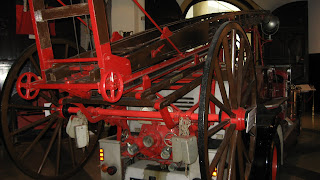 A thorough inspection will reveal that the M-01-27 has transportable aerial ladder as its choice for rear mounting to cope with Macau rising skyline. M-01-25 however spots only a wooden version.
The Museum is manned by full time members of Macau Fire S ervices but they lack good grasp of English. Hence, communicating with them is a challenge and a real barrier if we need information beyond the captions.
Fire fighting enthusiasts flying in and out of the Macau Airport should also look out for Rosenbauer Panther 6X6 (unit #11) - at the main runway.
The opportunity to view one of the world’s most advanced Airport Fire Fighting Vehicle is perhaps the perfect eye-opener to discover the fire fighting heritage in Macau.
Monday, November 10, 2008
Pulau Besar Exhibition- Another Letdown by PERZIM
The Malacca Museum Board (PERZIM) is organizing an event titled “Pameran Menyingkap Sejarah and Misteri Pulau Besar” or Appreciating Pulau Besar History and Mystery Exhibition. It was launched by the Chief Minister of Malacca on Sunday, Nov 9, 08 (Berita Harian).
Pulau Besar, located off the coast of Malacca has for generations exude a mysterious shroud among locals and visitors that the island is the realm of an omnipotent ‘dato’.
Taboos were many if you’re holidaying in Pulau Besar. Non-Muslim visitors are well advised to abstain from their favorite ‘non-halal’ meals preferably a day earlier or else the 20 minutes boat journey from Umbai could be a catastrophic one.
A few individual cemeteries with extra large parameters dot the landscape at the southern tip of the island. They are believed to be the final resting place of renowned warriors or even royalties from the Malacca Sultanate, hence their magical prowess.
In the 80s, several large scale tourism plans were in the pipeline to transform the rustic island into a mega tourism draw. Spearheading the transformation is the state religious body with an ambitious task to clear the island from these kurafah elements. Sacred tombs and shrines or keramat were demolished but if you ask the villagers, the taboos and superstitions remain strong.
However, modern day Pulau Besar now boasts a 18-hole golf course. Visitors armed with glossy colorful brochures have turned blind eyes to these taboos. Villagers expressed shock and disbelief about this turnabout event and puzzled how tourists have no qualms about frolicking with their loved ones in this island.
Historically, Pulau Besar, the largest of the five Malacca islets was conspicuously missing in all known annals or maps compare to nearby islands i.e Pulau Upeh and Pulau Panjang (now Pulau Melaka after being reclaimed).
Pulau Upeh was instrumental to the Portuguese in the construction of a newly fortified Malacca and together with Pulau Panjang played crucial roles in resisting naval attacks on Malacca in the subsequent centuries.
During the closing hours of World War II, Pulau Besar was the site of horrid mass executions carried out by the defeated Japanese Imperial Army. Countless bayoneted bodies of locals (mainly of Chinese descend) charged or otherwise with collaborating with the Allied Forces were believed to have being dumped inside a large well.
Unfortunately, the details on this historical well and its vicinity have being whitewashed and they too have fallen victim to the state government’s mid-80s wonton rush to turn the island into a holiday paradise. Despite its dark chapter in the state’s history, there is no mention of the tumultuous event in the island.
There is vague information on what is the focus of this PERZIM event. My best guess is that the central theme would feature the tombs, keramat and the island’s role during and the aftermath following the fall of the Malacca Sultanate Empire.
Few have doubts about PERZIM ability to organize a thorough and well researched exhibition. Numerous past PERZIM activities have critically fell short of achieving the objective of presenting events relevant and concurrent to Malacca’s development as the nation’s premier historical state and for the betterment of the local population.
“Pameran Menyingkap Sejarah and Misteri Pulau Besar” only reaffirms the cynics lack of enthusiasm with the state museum boards and its peculiarity towards mysticism and the unknown realms.
Pulau Besar, located off the coast of Malacca has for generations exude a mysterious shroud among locals and visitors that the island is the realm of an omnipotent ‘dato’.
Taboos were many if you’re holidaying in Pulau Besar. Non-Muslim visitors are well advised to abstain from their favorite ‘non-halal’ meals preferably a day earlier or else the 20 minutes boat journey from Umbai could be a catastrophic one.
A few individual cemeteries with extra large parameters dot the landscape at the southern tip of the island. They are believed to be the final resting place of renowned warriors or even royalties from the Malacca Sultanate, hence their magical prowess.
In the 80s, several large scale tourism plans were in the pipeline to transform the rustic island into a mega tourism draw. Spearheading the transformation is the state religious body with an ambitious task to clear the island from these kurafah elements. Sacred tombs and shrines or keramat were demolished but if you ask the villagers, the taboos and superstitions remain strong.
However, modern day Pulau Besar now boasts a 18-hole golf course. Visitors armed with glossy colorful brochures have turned blind eyes to these taboos. Villagers expressed shock and disbelief about this turnabout event and puzzled how tourists have no qualms about frolicking with their loved ones in this island.
Historically, Pulau Besar, the largest of the five Malacca islets was conspicuously missing in all known annals or maps compare to nearby islands i.e Pulau Upeh and Pulau Panjang (now Pulau Melaka after being reclaimed).
Pulau Upeh was instrumental to the Portuguese in the construction of a newly fortified Malacca and together with Pulau Panjang played crucial roles in resisting naval attacks on Malacca in the subsequent centuries.
During the closing hours of World War II, Pulau Besar was the site of horrid mass executions carried out by the defeated Japanese Imperial Army. Countless bayoneted bodies of locals (mainly of Chinese descend) charged or otherwise with collaborating with the Allied Forces were believed to have being dumped inside a large well.
Unfortunately, the details on this historical well and its vicinity have being whitewashed and they too have fallen victim to the state government’s mid-80s wonton rush to turn the island into a holiday paradise. Despite its dark chapter in the state’s history, there is no mention of the tumultuous event in the island.
There is vague information on what is the focus of this PERZIM event. My best guess is that the central theme would feature the tombs, keramat and the island’s role during and the aftermath following the fall of the Malacca Sultanate Empire.
Few have doubts about PERZIM ability to organize a thorough and well researched exhibition. Numerous past PERZIM activities have critically fell short of achieving the objective of presenting events relevant and concurrent to Malacca’s development as the nation’s premier historical state and for the betterment of the local population.
“Pameran Menyingkap Sejarah and Misteri Pulau Besar” only reaffirms the cynics lack of enthusiasm with the state museum boards and its peculiarity towards mysticism and the unknown realms.
Thursday, November 6, 2008
Macau Firecracker History
Miniscule Macau with no natural resources to call its own has always bellied on the skills and the cheap wages of its industrious people. It was the only mean of survival.

 The period was known as the Golden Years of Traditional Working Industries in Macau and it ushered a rapid growth of firecrackers factories.
 Located along the busy Rua das Lorchas next to the Macau Masters Hotel, the disused building offers a rare glimpse into Macau’s past and a firecraker making facility.
Hard to imagine but the economic landscape of the former Portuguese enclave after the Second World War was vastly in contrast to the current soaring casinos adorning its futuristic skyline.
Before the likes of Venetian, Wynn and Sands made their presence felt in Macau, the backbone industry of the 50s and 60s was the laborious firecrackers making trade.
Before the likes of Venetian, Wynn and Sands made their presence felt in Macau, the backbone industry of the 50s and 60s was the laborious firecrackers making trade.
Wages from making firecrackers, matches and incense fed mouths and offered hope to the destitute, some having just escaped from the brutal uncertainty of a newly installed Communist regime across its border.
 The period was known as the Golden Years of Traditional Working Industries in Macau and it ushered a rapid growth of firecrackers factories.
At its height, Macau boasted seven such factories and top in terms of local employment. ‘Fabrico en Macao’ miniature explosives soon became the must-have ingredients for all Chinese festivals world-over.
Unfortunately, not much of this proud Macau heritage remains today.
Unfortunately, not much of this proud Macau heritage remains today.
But for the historical buffs, a visit to the grayish two storey building that once housed the Kwong Hing Tai Firecracker Manufacturer is a good start.
 Located along the busy Rua das Lorchas next to the Macau Masters Hotel, the disused building offers a rare glimpse into Macau’s past and a firecraker making facility.
 Interestingly, the building stands on concrete stilts above the muddy waters of the Inner harbor, perhaps as a safety feature.
However, the industry began to take a backseat in the 80s when laborers were drawn to better paid jobs and the safer working environment in the textile and toy making industries.
However, the industry began to take a backseat in the 80s when laborers were drawn to better paid jobs and the safer working environment in the textile and toy making industries.
The advent of China as the new firecracker manufacturing powerhouse further compounded the situation.
The Museum of Macau (Admission – M$15/Adult) does a decent job of bringing back to life the sights of a bygone firecracker industry.
The Museum of Macau (Admission – M$15/Adult) does a decent job of bringing back to life the sights of a bygone firecracker industry.
Visitors will find exhibits on the tools of trade used in the making of firecrackers. Rare old photos also reveal how firecrackers are manually prepared by mixing the explosive cocktail and the bare essential environment workers must work with in the factories.

Needless to say, the artifacts salvaged by the Museum have allowed an appreciation for an important historical chapter in Macau’s history.
No quest for the firecracker heritage in Macau will be complete without the opportunity to catch the awesome International Fireworks Display Contest.

Needless to say, the artifacts salvaged by the Museum have allowed an appreciation for an important historical chapter in Macau’s history.
No quest for the firecracker heritage in Macau will be complete without the opportunity to catch the awesome International Fireworks Display Contest.
According to Macau Tourist Guide, the annual event takes place in late September and early October, and the perfect spot to watch the firework displays is at the waterfront near the Macau Tower.
Wednesday, October 15, 2008
Wickham Trolley - The Forgotten Malayan Emergency Hero.
Railway services in Peninsula Malaysia were the preferred mode of transportation back in the days when the country was largely covered in jungle and lacked good road networks.
Trains were the lifeline to move people and produce around the country.
When the Malayan communist insurgency peaked, railway services particularly the railroads became favorite targets of guerilla saboteurs. As the conflict escalated, the terrorists became bolder at blowing up rail tracks and inflicted heavy human cost.

The devastation soon overwhelmed the authority and a quick fix to the problem was urgently needed.
Before too long, the security forces found their answer in the British made armored Wickhams Trolley – a tank look-alike except it ran on train tracks. The trolleys were originally manufactured by D Wickham & Co of Ware, Hertfordshire and brought to Malaya by the colonial administration.
Each of the 2-ton Wickham Trolleys or AWT, was armed with search light and machine guns on the turret. They were immediately deployed in key roles as front guard and to provide cover for interstate train services.
Subsequent insurgent attempts to disrupt railway services were met fiercely by government soldiers in these self-powered Wickhams on steel wheels. AWT quickly proved itself to be a deterrent force and provided all-weather and round-the-clock protection for all trains.
However, when the Emergency ended in 1960, AWT triumphing records were cut short and many of the AWTs were left idle at KTM sheds in Klang. Their f ormidable fighting tales began to fade with time too.
Recently, the railway authority has embarked on giving the AWT a new lease of life as war relics in various museums and establishments.
For the best view of the Wickhams and to get a glimpse of how AWT was effective in its role, then check out the Armored Trolley No. 60 at the Malaysian Army Museum in Port Dickson.
The Army’s AWT No. 60 spots a grey body and it is parked along a steam locomotive and train coach. The museum has undoubtedly the best display of the Wickham and with a bit of imagination, visitors can see for themselves how the armored trolley protected trains in those turbulent times.
The Royal Police Museum in Lake Garden, KL is the next best bet to see a Wickham. AWT No. 63 is painted in police blue indicating a different ownership but the logo on its side shows KTM with its roaring tiger.

No much is revealed in the Police Museum about the success made by the Malaysian Police on the Wichham but fighting communist insurgency in those days was a concentrated effort involving different parties and strategies.
One can also head to the less conspicuous Tunku Abdul Rahman Memorial in KL to see -AWT No. 56.
However, like all the AWT on display, they are exhibited outdoor and their fate is left to the mercy of the weather. Information on the Wickham is sorely lacking and similarly all venues don’t provide sufficient materials about where and how the Wickhams were deployed.
One need to go to the KTM Mini Museum at the Old KL Train Station to find Wickham related materials. In its small gallery, there is brief information on the three Wickham Trolleys and their whereabouts. There are old photographs showing men on the AWT preparing guns and search-light, but unfortunately, this railway museum does not have static display of the armored trolley.
Trains were the lifeline to move people and produce around the country.
When the Malayan communist insurgency peaked, railway services particularly the railroads became favorite targets of guerilla saboteurs. As the conflict escalated, the terrorists became bolder at blowing up rail tracks and inflicted heavy human cost.

The devastation soon overwhelmed the authority and a quick fix to the problem was urgently needed.
Before too long, the security forces found their answer in the British made armored Wickhams Trolley – a tank look-alike except it ran on train tracks. The trolleys were originally manufactured by D Wickham & Co of Ware, Hertfordshire and brought to Malaya by the colonial administration.
Each of the 2-ton Wickham Trolleys or AWT, was armed with search light and machine guns on the turret. They were immediately deployed in key roles as front guard and to provide cover for interstate train services.
Subsequent insurgent attempts to disrupt railway services were met fiercely by government soldiers in these self-powered Wickhams on steel wheels. AWT quickly proved itself to be a deterrent force and provided all-weather and round-the-clock protection for all trains.
However, when the Emergency ended in 1960, AWT triumphing records were cut short and many of the AWTs were left idle at KTM sheds in Klang. Their f
 ormidable fighting tales began to fade with time too.
Recently, the railway authority has embarked on giving the AWT a new lease of life as war relics in various museums and establishments.
For the best view of the Wickhams and to get a glimpse of how AWT was effective in its role, then check out the Armored Trolley No. 60 at the Malaysian Army Museum in Port Dickson.
The Army’s AWT No. 60 spots a grey body and it is parked along a steam locomotive and train coach. The museum has undoubtedly the best display of the Wickham and with a bit of imagination, visitors can see for themselves how the armored trolley protected trains in those turbulent times.
The Royal Police Museum in Lake Garden, KL is the next best bet to see a Wickham. AWT No. 63 is painted in police blue indicating a different ownership but the logo on its side shows KTM with its roaring tiger.

No much is revealed in the Police Museum about the success made by the Malaysian Police on the Wichham but fighting communist insurgency in those days was a concentrated effort involving different parties and strategies.

One can also head to the less conspicuous Tunku Abdul Rahman Memorial in KL to see -AWT No. 56.
However, like all the AWT on display, they are exhibited outdoor and their fate is left to the mercy of the weather. Information on the Wickham is sorely lacking and similarly all venues don’t provide sufficient materials about where and how the Wickhams were deployed.
One need to go to the KTM Mini Museum at the Old KL Train Station to find Wickham related materials. In its small gallery, there is brief information on the three Wickham Trolleys and their whereabouts. There are old photographs showing men on the AWT preparing guns and search-light, but unfortunately, this railway museum does not have static display of the armored trolley.
Monday, October 13, 2008
Fort Cornwallis Lighthouse - The Hidden Treasure of Penang Heritage.
 The 19th century Fort Cornwallis Lighthouse is one of the best hidden colonial gems in Penang’s UNESCO heritage enclave.
Many visitors often give it a miss although it is just a stone throw away from the iconic British fortress of the same name.
Penang tourism players fare no better and they too overlook the lighthouse potential and its historical importance to Penang’s maritime role.
The British built the lighthouse in 1882 when harbour traffic began to grow for a prosperous Penang. Now in its advance age, the historic lighthouse no longer served to warn ships approaching the Penang cape.
The lighthouse is now manned by Jabatan Laut, Malaysia’s Maritime Authority, and offers fascinating opportunity to acquaint oneself with a bygone maritime era. Admission is free and it is accessible from a small northern entrance of the historical complex.

Walk inside the lighthouse, and you will learn why it is structurally one of its kinds in this country. Most lighthouses in the Malay archipelagos consist traditionally of a lone silo structure i.e. Tanjung Tuan, Malacca(1880), fitted with warning beacons on the top.
Not the Fort Cornwallis Lighthouse.
It has a white coated light tower which sits on a huge steel frame and next to it, a 21-meter T-shaped mast. Together, they fill the entire landscape and probe the curious about the fate of this ex-guardian of the narrow Penang Strait.
For most visitors, the slow climb, about 15 minutes, to the top of the claustrophobic watch tower and the warning beacon is undoubtedly the highlight of the visit.
Walking up on th
 e steel staircase might prove daunting for the vertical challenged. A wrong step could spell disaster to anyone’s holiday and when the steps are particularly slippery after a drizzle. Parents with small children are best cautioned against taking the challenge.
However the panoramic view at the tower is worth the effort. Visitors will be rewarded with an all-round perspective of the city, strait and the mainland.
In the distance, the full views of multi-coloured Penang ferries come unfold. Catch also cargo laden vessels berthing to take Made-in-Penang goods to the world.
Stretch your viewing canvas and over the horizon, you will find the Penang Bridge fills the background.

On the ground level, a small chamber houses a delightful mini museum and showcases lighthouse artefacts like communication equipments and giant bulbs used before GPS and satellite controlled gadgetries made them obsolete.
Penang State should work on this oversight and promote the lighthouse as a full fledge tourist attraction but more urgently, accord and preserve it with a heritage status.
Friday, October 10, 2008
Imjingak - Korea's Cold War Heritage.
 Imjingak Tourist Resort with its 4-storey metallic pavilion and the semi arch observation platform is perfectly located to view the iconic Bridge of Freedom. About 13,000 Allied prisoners-of-war made their final desperate dash for freedom across this wooden bridge at the closing stage of the brutal Korean War in 1953.
Since the new millennium, South Korean authority keen on reunification with its communist North brethrens has embarked on making Imjingak a heritage site. The venue makes an ideal living museum to prepare the uninitiated on the issues confronting the Korean dilemma.

Imjingak is even adeptly lauded by tourist brochures as the must-see venue to witness the only divided country in the world!
Getting to Imjingak is easy and travellers have a choice of car, bus or rail, and it is merely an hour drive away from Seoul.
Tourists will be greeted by its impressive Visitor Center which overlooks the heavily fortified banks of Imjin River and beyond the reclusive North Korea.
Unfortunately, most tour guides would want you to believe that Imjingak sits on the world’s most volatile border in modern history but soldiers guarding on the banks of the Imjin River are mainly South Korean .
.
Nevertheless, the much feared and trigger-happy North Koreans are in fact positioned a further four km north from Imjingak.
Needless to say, South Korean military fearing a potential large scale strike from its Red neighbors, has designated defence lines in by placing barbed wires and army lookout posts on the edges of the Civilian Passage Restricted Line (CPRL).
 .
.Nevertheless, the much feared and trigger-happy North Koreans are in fact positioned a further four km north from Imjingak.
Needless to say, South Korean military fearing a potential large scale strike from its Red neighbors, has designated defence lines in by placing barbed wires and army lookout posts on the edges of the Civilian Passage Restricted Line (CPRL).
Thus, visitors often get the false impression that South Korea ends at Imjingak, and the Imjin River the natural border between these two hostile neighbors.
A quick check on the maps will reveal that the fences at Imjingak are actually the Southern CPRL, with a heavily guarded buffer zone lining parallel to the Northern CPRL inside North Korea territory.

There is also the Military Demarcation Line (MDL) central to the buffer zone and together they cut the Peninsula into halves.

There is also the Military Demarcation Line (MDL) central to the buffer zone and together they cut the Peninsula into halves.
During my visit to see first-hand the cold war frontier in late September 2008, it got off to an unexpected start when we were stopped in our car by heavily armed South Korean personnel and our guide informed us that the army is conducting a drill to detonate two nearby road tunnels leading to the north border. (Naturally no photos were taken for fear of antagonizing the M-16 guys)
The Military Demarcation Line is the de facto border agreed by these two warring factions, amid reluctantly, and explains why Korea is also home to 30,000 plus American infantrymen.
 The entire stretch of land within the CPRL is a no-man territory, but is more popularly known as Demilitarized Zone or DMZ.
Interestingly, only foreigners holding valid passports are allowed near the epic center of DMZ or Panmunjum.
 Here, one is only a breath away from North Korean guards smacking in their traditional goose attire from the Soviet era. Their Southern counterparts have their peculiarity too. Dark sunglasses and arms folded in karate pose are their choice of instilling fear and awe.
Panmunjum is however, a no-go for Korean nationals. The furthermost point Koreans are allowed to go near their Northern neighbors is the border town of Dorasan.
Today, tourists take the scheduled Korail trains on the reconstructed 4 kilometer long Gyeongui Line to Dorasan Station from Imjingak Station (Train fare - KW2,000 / US$2 return).
For many years, the railway line was the main steel artery for intra Korea travel but the war cut it short at Imjingak.
 At Dorasan, one can spy with the coin operated binoculars (KW700) on the North Korean industrial city of Gaeseong. Not to be missed is the guided tour inside the 3rd Tunnel, a must for those who doubt North Korean aggressive ambition.
A rusty steam locomotive outside the Imjingak mini museum casts a vivid reminder of the once extensive railway networks connecting all corners of the Korean Peninsula prior to the devastating war.
Take a few steps towards the museum rear, more war relics and the scales of battles fought greet you – The Sherman that pounded on the Russian T3 4 or perhaps intrigued by the Sabres that triumphed over the MiGs in the Korean skies.
Even the most bewildered visitor is unlikely to escape the highly charged atmosphere between both sides at the border.
My visit to Imjingak has left me with an overwhelming realization of this long lasting border conflict and how all aspects of border life are teeming with military alertness.
 4 or perhaps intrigued by the Sabres that triumphed over the MiGs in the Korean skies.
Even the most bewildered visitor is unlikely to escape the highly charged atmosphere between both sides at the border.
My visit to Imjingak has left me with an overwhelming realization of this long lasting border conflict and how all aspects of border life are teeming with military alertness.
 Here, no one gambles with the peaceful existence or risk provoking enemies who have no qualms to unleash the perils of Cold War on all.
While it gives you the impression that human life is cheap at the border area, visitors will be surprised to find Imjingak is also the main venue to celebrate Chuseok - aka Korean's Thanksgiving.
 Family members torn by the war come here on an annual pligrimage to express their longing for relatives living across the barbed wires.
Besides the ruined railway bridge and antiqued military displays, the visit to Imjingak offers visitors an everlasting view on the terrible human cost brought by idealogic conflicts.

Tuesday, September 23, 2008
National Museum of Singapore - Light System
Lightemotion uses illumination as scenography for the National Museum of Singapore's collection.
By David Sokol (Architectural Record - February 2008)
A major renovation and expansion of the National Museum of Singapore by Singapore-based W Architects presented a tabula rasa for light designers at Lightemotion and exhibition designers from GSM Group. François Roupinian, who founded Montreal-based Lightemotion in 2002, likens the museum’s 126,000-square-foot addition to a “complete black box.”
Founded as a natural history museum in 1887, the institution used its recent construction project also to expand its curatorial focus, which now encompasses cultural identity and nation building.
This broader scope meant that the museum’s collection would be spread thin across the new galleries, creating the need for the exhibition and lighting designers to engender a sense of intimacy in the cavernous interiors.
In a gallery located inside the original Neoclassical building, for example, curators lined the room’s perimeter with handmade Singaporean fabrics, but little else.
To concentrate visitors’ attention on these panels, Lightemotion grazed each textile with an AR111 tightened to a 4-degree beam spread. “Grazing really makes a strong statement,” Roupinian says, “so just by illuminating those layers, by highlighting their texture and making them shimmer, we could make the space pop.”
In addition to providing the illusion of a smaller scale, the designers at Lightemotion helped reinforce the museum’s narrative. “We tried to make lighting a third character,” states Roupinian. “The lighting became the scenography.”
In a gallery devoted to Singapore’s theatrical traditions, the firm suspended bare light bulbs from the ceiling, letting the electrical cords swag this way and that.
A century ago, Singaporean opera singers worked as itinerant performers, explains Roupinian. So “we tried to create a bit of the feeling of the nomadic dressing room, where performers would hang all those light bulbs to do their makeup,” he says.
While the original galleries now focus on themes such as fashion and theater, the extension designed by W Architects houses the museum’s permanent collection. Rather than divide galleries thematically, GSM designed two paths that follow the chronology of Singapore’s political and social histories.
One of the rare intersections between the two paths serves as the entryway to galleries devoted to the Japanese occupation. Here, too, suspended lighting does the work of props. “We wanted people to experience—in a metaphorical way—the anguish and fear [that residents felt during the occupation],” Roupinian says.
So GSM designed an angled concrete wall that outlines the route, and Lightemotion illuminated it with attenuated Edison bulbs whose filaments are dimmed to 5 percent. “They shake a bit just so you can feel the fragility,” Roupinian says of the quivering filaments.
Prior to this junction, along the social-history path, museumgoers can explore a re-created opium den where paper lanterns hang from the ceiling; a metal-halide/fiber-optic system integrated in the raised floor uplights a metal-mesh ceiling, where shadows evoke smoke. As the permanent collection approaches the most recent decades, a gallery devoted to contemporary manufacturing features a ceiling of myriad luminaires fabricated in Singapore.
The designers also used projected images to help fill the National Museum’s abundant space. In one example, at the start of the permanent collection, they created a collage of still images that dance across lycra panels stretched inside a drumlike volume.
At the end of the journey, films of contemporary Singaporean life play on canted walls, and embedded fiber optics in vitrines give the impression that the exhibition cases have somehow captured the spillover light.
A cinematic approach characterizes GSM and Lightemotion’s work at the National Museum of Singapore. In the pools of light that underscore certain artifacts, for example, the designers created counterparts to the range of luminous and emotional intensity found in film.
“Singaporeans are used to a wash of fluorescent light,” Roupinian says. That the National Museum of Singapore does the opposite offers testimony to a trusting client, and adds a new layer of meaning to the island nation’s relatively brief history.
By David Sokol (Architectural Record - February 2008)
A major renovation and expansion of the National Museum of Singapore by Singapore-based W Architects presented a tabula rasa for light designers at Lightemotion and exhibition designers from GSM Group. François Roupinian, who founded Montreal-based Lightemotion in 2002, likens the museum’s 126,000-square-foot addition to a “complete black box.”
Founded as a natural history museum in 1887, the institution used its recent construction project also to expand its curatorial focus, which now encompasses cultural identity and nation building.
This broader scope meant that the museum’s collection would be spread thin across the new galleries, creating the need for the exhibition and lighting designers to engender a sense of intimacy in the cavernous interiors.
In a gallery located inside the original Neoclassical building, for example, curators lined the room’s perimeter with handmade Singaporean fabrics, but little else.
To concentrate visitors’ attention on these panels, Lightemotion grazed each textile with an AR111 tightened to a 4-degree beam spread. “Grazing really makes a strong statement,” Roupinian says, “so just by illuminating those layers, by highlighting their texture and making them shimmer, we could make the space pop.”
In addition to providing the illusion of a smaller scale, the designers at Lightemotion helped reinforce the museum’s narrative. “We tried to make lighting a third character,” states Roupinian. “The lighting became the scenography.”
In a gallery devoted to Singapore’s theatrical traditions, the firm suspended bare light bulbs from the ceiling, letting the electrical cords swag this way and that.
A century ago, Singaporean opera singers worked as itinerant performers, explains Roupinian. So “we tried to create a bit of the feeling of the nomadic dressing room, where performers would hang all those light bulbs to do their makeup,” he says.
While the original galleries now focus on themes such as fashion and theater, the extension designed by W Architects houses the museum’s permanent collection. Rather than divide galleries thematically, GSM designed two paths that follow the chronology of Singapore’s political and social histories.
One of the rare intersections between the two paths serves as the entryway to galleries devoted to the Japanese occupation. Here, too, suspended lighting does the work of props. “We wanted people to experience—in a metaphorical way—the anguish and fear [that residents felt during the occupation],” Roupinian says.
So GSM designed an angled concrete wall that outlines the route, and Lightemotion illuminated it with attenuated Edison bulbs whose filaments are dimmed to 5 percent. “They shake a bit just so you can feel the fragility,” Roupinian says of the quivering filaments.
Prior to this junction, along the social-history path, museumgoers can explore a re-created opium den where paper lanterns hang from the ceiling; a metal-halide/fiber-optic system integrated in the raised floor uplights a metal-mesh ceiling, where shadows evoke smoke. As the permanent collection approaches the most recent decades, a gallery devoted to contemporary manufacturing features a ceiling of myriad luminaires fabricated in Singapore.
The designers also used projected images to help fill the National Museum’s abundant space. In one example, at the start of the permanent collection, they created a collage of still images that dance across lycra panels stretched inside a drumlike volume.
At the end of the journey, films of contemporary Singaporean life play on canted walls, and embedded fiber optics in vitrines give the impression that the exhibition cases have somehow captured the spillover light.
A cinematic approach characterizes GSM and Lightemotion’s work at the National Museum of Singapore. In the pools of light that underscore certain artifacts, for example, the designers created counterparts to the range of luminous and emotional intensity found in film.
“Singaporeans are used to a wash of fluorescent light,” Roupinian says. That the National Museum of Singapore does the opposite offers testimony to a trusting client, and adds a new layer of meaning to the island nation’s relatively brief history.
Monday, September 22, 2008
Muzium Negara - A New Dawn?
Muzium Negara, the national repository of the country's heritage is undergoing a physical change for the first time since its inception in the early 60s. Under the patronage of Tunku Abdul Rahman, the national museum was the place to showcase a proud heritage that traverses across colors and race.
However in recent years, the national museum and the exhibits are losing its frantic battle to draw more visitors. The museum has become notorious of becoming museum piece itself.
Few were to be blamed.
Society changed and museums, at least in Malaysia, are no longer the place to take your kids to. The mushrooming of mega malls did not help either.
The axe finally came when policy makers turned blind eyed to the latest science and technology in museulogy. Key museum players simply fail to overhaul Muzium Negara and make the museum relevant to the changing taste of the public.
 Generations of visitors are continuously greeted by the same mundane features on keris, bridal chambers, stuffed animals and wayang kulit. Countless internet postings came with a frightening verdict - Muzium Negara is BORING!
Yet there is hope now.
 Years of increasing revenue from the tourism industry have make the government to view the National Museum in a whole new perspective. Malaysian government is giving it the long overdue facelift to entice more foreigners to visit the country. In fact, the new minister in charge in his Museum Day 2008 speech, has listed it as one of the two main functions of Muzium Negara.
The overhaul project valued at some RM20 million was first mooted in August 2006 and after several rounds of delay, the project is currently at its final stage of completion due late 2008.
Obviously, the museum authority has high hopes. Rais Yatim was quoted to have set it on par if not exceed some of the leading museum establishments in the region, notably in Singapore. Others are predicting that ticket sales will hit all time high.
Sadly, not much is said about the quality of the exhibition galleries.
Gallery C and D were opened to visitors since August 2007. The new Gallery C will take visitors through the different colonial eras with dioramas of on-board a Portuguese Galleon as it pounded Malacca in the 15th century. Close by, you can pretend to be a British guard at Fort Cornwallis. Or perhaps bear witness to the signing of the Perak Treaty in the 18th century on board on a steamer. Then there is more on the bloodied history of colonial conquests and regional forces like the Dutch and Bugis. Gallery C also dwells on the formation years the country took as a tin and rubber producer. Ingots and a large tin dredge model gave visitors a small but impressive display of the tin industry in the country.
It is perhaps the best of the two because visitors are left asking for more next.
In Gallery D, nationalism theme takes center stage but ends up trying too hard to impress visitors. Bad lighting and a rather disappointing choice of displays spell future downfall.
According to reliable inside source, the galleries have turned turf wars between the people running Muzium Negara and those from the ministry.
The overhaul of the two galleries upstairs were administered separately and the museum management basically were told to lay their hands off. Hence the adversary. Choose carefully when you praise these galleries, otherwise you'll get a mouthful how these galleries are no different from a showroom. You'll hear discontentment and disapproval over how basic museum guidelines like the positioning of display fonts are thrown into the air.
The rivalry is only natural because the first stage of the renovation are directives from the ministry and they have put something completely alien right under the nose of the Muzium Negara management.
But on the other hand, the museum management is guilty of idling too long and not attuned to position Muzium Negara as the nation premier museum.
However, the museum management now have their hands full of revenge at least till the year end. The stake is high for them to show how they can successfully turn around Galleries A and B on the ground floor.
Exclusive work progress report has revealed that the star attraction in Gallery A will be the Perak Man housed in a cave diorama. Also in the pipeline is a walk through timeline of Malaysian flora and faunas and a section with the opportunity to experience 'earthquake'.
The source also notes that Gallery B will confine to solely feature the emergence of the Malay Sultanate since the 13th. century. Maybe offering a completely new way to view royal regalia but it would not surprise anyone if it is just to know who's who in the Malay palaces and their long lineage.
Nevertheless, it appears that the 'new' museum has completely discarded the museum early day's concept of showcasing the many rich and colorful racial diversity. Malaysian minorities highlights are completely ignored. Polarization again bears its ugly head and Malaysians again is at its losing end.
It is ironic to me that Muzium Negara which falls under the same ministry that oversees Unity in the country has left this important factor out when they sat collectively to plan the future for the country's main repository of culture and heritage!
Unless one reads along the line of the authority and their sole objective. Muzium Negara will be Malaysia's latest cash cow and it is to bankroll on more tourists.
One can then understand why there are also fundamental change in the new museum's DNA.
It has also opted to move away from research theme in their displays. Story telling now are visually more stimulating but the information is frustratingly brief. Anyone wanting a rewarding outing at the museum will find walking on the corridors of Muzium Negara is no different from browsing through tour brochures.
Questions still remain if the rejuvenated Muzium Negara will reclaim its rightful place among Malaysians as the place to visit and the center of research in the region.
However in recent years, the national museum and the exhibits are losing its frantic battle to draw more visitors. The museum has become notorious of becoming museum piece itself.
Few were to be blamed.
Society changed and museums, at least in Malaysia, are no longer the place to take your kids to. The mushrooming of mega malls did not help either.
The axe finally came when policy makers turned blind eyed to the latest science and technology in museulogy. Key museum players simply fail to overhaul Muzium Negara and make the museum relevant to the changing taste of the public.
Generations of visitors are continuously greeted by the same mundane features on keris, bridal chambers, stuffed animals and wayang kulit. Countless internet postings came with a frightening verdict - Muzium Negara is BORING!Yet there is hope now.
 Years of increasing revenue from the tourism industry have make the government to view the National Museum in a whole new perspective. Malaysian government is giving it the long overdue facelift to entice more foreigners to visit the country. In fact, the new minister in charge in his Museum Day 2008 speech, has listed it as one of the two main functions of Muzium Negara.
The overhaul project valued at some RM20 million was first mooted in August 2006 and after several rounds of delay, the project is currently at its final stage of completion due late 2008.
Obviously, the museum authority has high hopes. Rais Yatim was quoted to have set it on par if not exceed some of the leading museum establishments in the region, notably in Singapore. Others are predicting that ticket sales will hit all time high.
Sadly, not much is said about the quality of the exhibition galleries.
Gallery C and D were opened to visitors since August 2007. The new Gallery C will take visitors through the different colonial eras with dioramas of on-board a Portuguese Galleon as it pounded Malacca in the 15th century. Close by, you can pretend to be a British guard at Fort Cornwallis. Or perhaps bear witness to the signing of the Perak Treaty in the 18th century on board on a steamer. Then there is more on the bloodied history of colonial conquests and regional forces like the Dutch and Bugis.
Gallery C also dwells on the formation years the country took as a tin and rubber producer. Ingots and a large tin dredge model gave visitors a small but impressive display of the tin industry in the country.It is perhaps the best of the two because visitors are left asking for more next.
In Gallery D, nationalism theme takes center stage but ends up trying too hard to impress visitors. Bad lighting and a rather disappointing choice of displays spell future downfall.
According to reliable inside source, the galleries have turned turf wars between the people running Muzium Negara and those from the ministry.
The overhaul of the two galleries upstairs were administered separately and the museum management basically were told to lay their hands off. Hence the adversary. Choose carefully when you praise these galleries, otherwise you'll get a mouthful how these galleries are no different from a showroom. You'll hear discontentment and disapproval over how basic museum guidelines like the positioning of display fonts are thrown into the air.
The rivalry is only natural because the first stage of the renovation are directives from the ministry and they have put something completely alien right under the nose of the Muzium Negara management.
But on the other hand, the museum management is guilty of idling too long and not attuned to position Muzium Negara as the nation premier museum.
However, the museum management now have their hands full of revenge at least till the year end. The stake is high for them to show how they can successfully turn around Galleries A and B on the ground floor.
Exclusive work progress report has revealed that the star attraction in Gallery A will be the Perak Man housed in a cave diorama. Also in the pipeline is a walk through timeline of Malaysian flora and faunas and a section with the opportunity to experience 'earthquake'.

The source also notes that Gallery B will confine to solely feature the emergence of the Malay Sultanate since the 13th. century. Maybe offering a completely new way to view royal regalia but it would not surprise anyone if it is just to know who's who in the Malay palaces and their long lineage.
Nevertheless, it appears that the 'new' museum has completely discarded the museum early day's concept of showcasing the many rich and colorful racial diversity. Malaysian minorities highlights are completely ignored. Polarization again bears its ugly head and Malaysians again is at its losing end.
It is ironic to me that Muzium Negara which falls under the same ministry that oversees Unity in the country has left this important factor out when they sat collectively to plan the future for the country's main repository of culture and heritage!
Unless one reads along the line of the authority and their sole objective. Muzium Negara will be Malaysia's latest cash cow and it is to bankroll on more tourists.
One can then understand why there are also fundamental change in the new museum's DNA.
It has also opted to move away from research theme in their displays. Story telling now are visually more stimulating but the information is frustratingly brief. Anyone wanting a rewarding outing at the museum will find walking on the corridors of Muzium Negara is no different from browsing through tour brochures.
Questions still remain if the rejuvenated Muzium Negara will reclaim its rightful place among Malaysians as the place to visit and the center of research in the region.
Monday, September 8, 2008
Stadium Merdeka Wins UNESCO Award
A jury of 12 conservation experts gave Stadium Merdeka the Award of Excellence and the Suffolk house in Penang the Award of Distinction in the Unesco Asia-Pacific Heritage Awards for Culture and Heritage Conservation held in Bangkok (NST Sept 8, 08)
For those who fought hard to preserve the stadium’s historical importance, the award is a well earned recognition for a national monument that Malaysians accept as the symbol of our nationhood and its birth.
Not all share the belief unfortunately, and in the late 90s, the fate of Merdeka Stadium laid precariously in the hands of development juggernaut. A would-be victim of an outrageous trading chip by Tun Mahathir to fund his fancy Commonwealth Sports Complex in Bukit Jalil.
The more cynical ones perceived it all part of an elaborate scheme to discard the memoirs of our beloved Tunku - Malaysia’s first Prime Minister. However, the arrival of Pak Lah a decade later at the power helm, finally offered a ray of hope to the iconic football stadium.
Award-winning architect cum conservationist Laurence Poh was put in charge to put glory back to Stadium Merdeka. Soon, an army of jackhammers and hard hats descended on the bitumen track and concrete stands to give the stadium a new facelift.
Its seating capacity of previous high of 60,000 was scaled back to the heydays of Merdeka at under 20,000. The reduced seating capacity is far from the days when the Stadium housed Malaysia as an Asian football power house, but the new overall look is similar to what Tunku had envisioned when he led JKR engineers to transform Kuala Lumpur in time to celebrate our independence from the British.
At the core of the conservation plan is the preservation of the main façade of the grandstand. A mini museum cum photo gallery was included to showcase the stadium and its many historical events.
For those who fought hard to preserve the stadium’s historical importance, the award is a well earned recognition for a national monument that Malaysians accept as the symbol of our nationhood and its birth.
Not all share the belief unfortunately, and in the late 90s, the fate of Merdeka Stadium laid precariously in the hands of development juggernaut. A would-be victim of an outrageous trading chip by Tun Mahathir to fund his fancy Commonwealth Sports Complex in Bukit Jalil.
The more cynical ones perceived it all part of an elaborate scheme to discard the memoirs of our beloved Tunku - Malaysia’s first Prime Minister. However, the arrival of Pak Lah a decade later at the power helm, finally offered a ray of hope to the iconic football stadium.
Award-winning architect cum conservationist Laurence Poh was put in charge to put glory back to Stadium Merdeka. Soon, an army of jackhammers and hard hats descended on the bitumen track and concrete stands to give the stadium a new facelift.
Its seating capacity of previous high of 60,000 was scaled back to the heydays of Merdeka at under 20,000. The reduced seating capacity is far from the days when the Stadium housed Malaysia as an Asian football power house, but the new overall look is similar to what Tunku had envisioned when he led JKR engineers to transform Kuala Lumpur in time to celebrate our independence from the British.
At the core of the conservation plan is the preservation of the main façade of the grandstand. A mini museum cum photo gallery was included to showcase the stadium and its many historical events.
Subscribe to:
Posts (Atom)