
2009 will be an watershed year for Klang, and if the Sultan Selangor has his way, the royal town will have a heritage enclave to call its own in a year or two.
The successful opening of the Sultan Abdul Aziz Royal Gallery in early 2008 (pls read my blog article posted on Apr, 08) in the old quarters of Klang town has ignited new interest to preserve other similar colonial buildings in the vicinity.
Numerous royal dignitaries and visitors have made a beeline to visit the royal gallery including Sultan of Kedah and royalties from Negeri Sembilan.
However, the best PR triumph for the gallery, in my view, lies with its growing popularity with locals.
The gallery opts for a visitor friendly policy to encourage the public to discover the gallery for themselves. Despite the valuable exhibits inside, visitors can roam at their will and if there was security barrier, they have done a remarkable job of concealing them. The gallery staff are generally well-trained to ensure visitors have an uninterrupted visit.
Klang is moving in this new interesting direction as a heritage center and much of the credit goes to the Selangor royal family.
They have played a key role by spearheading buyouts (?) of buildings with significant historical value adjacent to the Royal Gallery. These buildings now used as commercial lots will be given a new lease of life by converting them into museums. They will be the new attractions in town and the exhibits will usher new interest in royal family and its history.
Tuesday, February 3, 2009

New Malaysian Museums For 2009.
Despite the gloom in Malaysia’s economical outlook, heritage aficionados and museum goers might have plenty to cheer for in 2009. Grabbing the headlines are new museum openings and they should provide some excitement and more importantly, generate impetus for a more heritage conscious society.
Based on reports from main dailies, there are 3 new museums in the pipeline and a further two including the national museum at its final stage of refurbishing.
According to the Museum Department Director General, Ibrahim Ismail, two museums – the Malaysian Textile Museum and the Natural History Museum will open its doors to visitors by the middle of the year.
The textile-themed museum, as I best recalled, was a brainchild of Pak Lah’s late spouse, Datin Seri Endon. She had vigorously promoted and encouraged batik –a traditional Malay textile art form- as mainstream fashion and an icon of Malaysian creativity, much to chagrin of the Indonesians.
Needless to say, with such strong backers for the project, it is no surprise to see KEKWA playing a huge role in this museum.
Its venue will be at the Moorish designed building which formerly housed Kraftangan, next to Sultan Abdul Samad Building. My guess is that a substantial portion of the exhibition will be devoted to Batik legacy. According to the DG, there will be a gallery to showcase Baba Nyonya fashion heritage but in my view, the gallery comes amidst too little and too late.
Malaysia found its tail caught between its legs in a race with our southern neighbors across the causeway to ride on the popularity of the Baba Nyonya heritage. Singapore has not only beaten us in 2008 by setting up a Peranakan Museum in the island republic but adding salt to injuries, a major portion of its collection were bought from Penang! (For more about this, please read “Cultural Coup by Singapore Peranakan Museum” posted on April 24, 2008)
In Putrajaya, work on the new Natural History Museum is progressing well and is expected to receive its first visitors in the second quarter of the year. The multi-million ringgit museum will be the showpiece of Malaysia’s natural richness and lauded by its founders to rival the best in the world.
A symposium in 2008 on the museum generated a lot of excitement amongst Malaysian scientists because many shared the view that the establishment of the museum is not just timely, but perfect as a springboard for those who keen to know our rainforests.
After a two-year hiatus, Muzium Negara and its four main galleries now come with new DNA for their exhibition themes. The revamp was a question of life and death for the national museum. It needed quick remedy to maintain its role as the nation’s leading repository and to safeguard its relevance to the Malaysian public. The RM20 million major facelift was the first for the national museum since its inception in the early 60s.
The reviews so far have remained surprisingly silent but I am fascinated with what I have discovered from my recent visits to the new Galleries D, C and A.
Despite my concerns with some of exhibition themes, the new galleries are ushering a new wave of museuology and exhibition designs in this country. Gone are the old musty feel and depressing displays that plagued so many of the galleries in Malaysian museums.
The newer versions entice visitors with an array of fascinating Malaysian spectrums and history through bold and captivating display and dioramas. Each theme takes you across well researched subjects and issues spanning millenniums, from the cave men dwelling in Niah to colonialism and to Proton cars.
Interestingly, 2nd quarter of the year will be a busy time for museum calendar.
Bank Negara is also joining the fray with a new Numismatics Museum. The old Muzium Bank Negara has shut dpwn since July 2008 and in its place, a completely new establishment is expected to open its doors in July 09.
This central bank initiated project will have a new home within the vicinity of the former Prime Minister Office in Bukit Perdana. It is purported to be larger than its predecessor in Bank Negara and comes equipped with interactive exhibits.
Up north, renovation work spearheaded by Jabatan Muzium at Taiping Museum is expected to be completed around the same time. According to the curator, there will be new facade, flooring and cutting edge exhibitions set to thrill visitors when they visit the oldest museum in Malaysia. (pls read article “Taiping Museum To Be Revamped - Dec 1, 08”)
Nevertheless, with all sectors of the economy coming to a gridlock, it is not surprising if heritage related development and conservation efforts for the coming months take a backseat in the government list of priority. However for the meantime, these museum openings will cast a welcome rainbow for the country’s heritage scene.
Based on reports from main dailies, there are 3 new museums in the pipeline and a further two including the national museum at its final stage of refurbishing.
According to the Museum Department Director General, Ibrahim Ismail, two museums – the Malaysian Textile Museum and the Natural History Museum will open its doors to visitors by the middle of the year.
The textile-themed museum, as I best recalled, was a brainchild of Pak Lah’s late spouse, Datin Seri Endon. She had vigorously promoted and encouraged batik –a traditional Malay textile art form- as mainstream fashion and an icon of Malaysian creativity, much to chagrin of the Indonesians.
Needless to say, with such strong backers for the project, it is no surprise to see KEKWA playing a huge role in this museum.
Its venue will be at the Moorish designed building which formerly housed Kraftangan, next to Sultan Abdul Samad Building. My guess is that a substantial portion of the exhibition will be devoted to Batik legacy. According to the DG, there will be a gallery to showcase Baba Nyonya fashion heritage but in my view, the gallery comes amidst too little and too late.
Malaysia found its tail caught between its legs in a race with our southern neighbors across the causeway to ride on the popularity of the Baba Nyonya heritage. Singapore has not only beaten us in 2008 by setting up a Peranakan Museum in the island republic but adding salt to injuries, a major portion of its collection were bought from Penang! (For more about this, please read “Cultural Coup by Singapore Peranakan Museum” posted on April 24, 2008)
In Putrajaya, work on the new Natural History Museum is progressing well and is expected to receive its first visitors in the second quarter of the year. The multi-million ringgit museum will be the showpiece of Malaysia’s natural richness and lauded by its founders to rival the best in the world.
A symposium in 2008 on the museum generated a lot of excitement amongst Malaysian scientists because many shared the view that the establishment of the museum is not just timely, but perfect as a springboard for those who keen to know our rainforests.
After a two-year hiatus, Muzium Negara and its four main galleries now come with new DNA for their exhibition themes. The revamp was a question of life and death for the national museum. It needed quick remedy to maintain its role as the nation’s leading repository and to safeguard its relevance to the Malaysian public. The RM20 million major facelift was the first for the national museum since its inception in the early 60s.
The reviews so far have remained surprisingly silent but I am fascinated with what I have discovered from my recent visits to the new Galleries D, C and A.
Despite my concerns with some of exhibition themes, the new galleries are ushering a new wave of museuology and exhibition designs in this country. Gone are the old musty feel and depressing displays that plagued so many of the galleries in Malaysian museums.
The newer versions entice visitors with an array of fascinating Malaysian spectrums and history through bold and captivating display and dioramas. Each theme takes you across well researched subjects and issues spanning millenniums, from the cave men dwelling in Niah to colonialism and to Proton cars.
Interestingly, 2nd quarter of the year will be a busy time for museum calendar.
Bank Negara is also joining the fray with a new Numismatics Museum. The old Muzium Bank Negara has shut dpwn since July 2008 and in its place, a completely new establishment is expected to open its doors in July 09.
This central bank initiated project will have a new home within the vicinity of the former Prime Minister Office in Bukit Perdana. It is purported to be larger than its predecessor in Bank Negara and comes equipped with interactive exhibits.
Up north, renovation work spearheaded by Jabatan Muzium at Taiping Museum is expected to be completed around the same time. According to the curator, there will be new facade, flooring and cutting edge exhibitions set to thrill visitors when they visit the oldest museum in Malaysia. (pls read article “Taiping Museum To Be Revamped - Dec 1, 08”)
Nevertheless, with all sectors of the economy coming to a gridlock, it is not surprising if heritage related development and conservation efforts for the coming months take a backseat in the government list of priority. However for the meantime, these museum openings will cast a welcome rainbow for the country’s heritage scene.
Tuesday, January 20, 2009
Photo Exhibition Retraces Railway Heritage.
 Train spotters in Malaysia should not miss the opportunity to experience the multimedia art exhibition titled - Iron Dragons of Malaya, and at the same time enjoy a nostalgic trip to the country’s largest railway shed – the KTMB workshop in Sentul.
The photography collection showcasing the depleting British-built shed and rolling stocks or whatever there is left were produced using state-of-the-art photography technique known as High Dynamic Range.


Visitors, according to K. Azril Ismail, the architect of the exhibition, will be rewarded with captivating 3-D like images. They will also be entertained by multimedia presentation which took Azril and his team a year to produ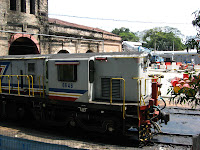 ce.
ce.
Such an effort is a befitting tribute to the train workshop as it spends its last remaining days at Sentul.
Sentul workshop first took its form in1905 but by the year end, the entire KTM overhaul job will be moved to Batu Gajah. The entire area is then set to undergo a massive property development and discards any association it has with the railway legacy.
Hence, Azril’s exhibition is not just timely but akin to an obituary for a century of faithful services rendered.
The Iron Dragons of Malaya – is currently run at KLPac till Jan 25, 09, and admission is free.
 ce.
ce.Such an effort is a befitting tribute to the train workshop as it spends its last remaining days at Sentul.
Sentul workshop first took its form in1905 but by the year end, the entire KTM overhaul job will be moved to Batu Gajah. The entire area is then set to undergo a massive property development and discards any association it has with the railway legacy.
Hence, Azril’s exhibition is not just timely but akin to an obituary for a century of faithful services rendered.
The Iron Dragons of Malaya – is currently run at KLPac till Jan 25, 09, and admission is free.
Truths about Sagada's Hanging Coffins.
 A top draw in Sagada in the Philippines is the Hanging Coffins.
 In Dec. 08, my family and I were the fortunate few to have seen the spectacle sight with our own eyes. However, we have to endure first the tiring 7-hour journey up the Cordilleras from Manila.
No much is said about the customs and why they place their deaths in high elevation. But with a bit of luck and probing, we soon got the answer.
Ferocious tribal wars were once a common threat in this part of the Philippines some two centuries ago, and Sagada was no exception.

The entire hilly communities were caught in these bizarre upheavals and nothing was spared including sacred burial sites.
No much is said about the customs and why they place their deaths in high elevation. But with a bit of luck and probing, we soon got the answer.
Ferocious tribal wars were once a common threat in this part of the Philippines some two centuries ago, and Sagada was no exception.

The entire hilly communities were caught in these bizarre upheavals and nothing was spared including sacred burial sites.
According to the Igorot villagers, coffins and graveyards often fell prey to the Ifugao headhunters from Bontoc, who sought the prized skulls, living or not.
Fearful of the diving backlash from their headless ancestors, quick thinking Igorot tribal leaders in Sagada came out with a brilliant plan to stop the rampage.
Fearful of the diving backlash from their headless ancestors, quick thinking Igorot tribal leaders in Sagada came out with a brilliant plan to stop the rampage.
The answer, it seemed, lies in making the coffins out of reach of the enemy, and where else but on the slopes of the many karst hills found here.
They have hoped that the physical attributes of the landscapes would served to deter the enthusiasm of the menacing Ifugao.

According to ancient funeral rites, the deceased must be seated in an upright position while villagers worked frantically to erect bamboo scaffolding leading to the elevated burial ground.
The task to take the coffin up on the sharp hillslopes are the job of pall bearers consisting of the villager youths. Theirs is not an effortless one.
They have hoped that the physical attributes of the landscapes would served to deter the enthusiasm of the menacing Ifugao.

According to ancient funeral rites, the deceased must be seated in an upright position while villagers worked frantically to erect bamboo scaffolding leading to the elevated burial ground.
The task to take the coffin up on the sharp hillslopes are the job of pall bearers consisting of the villager youths. Theirs is not an effortless one.
Besides, they risk fatal fall and they must also deal with the rotting fluids from the leaking coffin.
Nevertheless, a pall bearer’s job was traditionally held in high esteem. Interestingly, folks in Sagada once considered it a good omen if the pall bearers are showered in the nasty fluids while they carried out their task.
 However, when American missionaries took Christianity to Sagada, compromises were made and mixed the native rituals with their new found faiths.
Nowadays, hillslope burials have become a novelty and reserved only for those villagers who have two surviving generations of descendants.
This form of funeral rite is becoming rare and villagers will tell you that the last hanging burial in Sagada was held in June 2008.
Nevertheless, a pall bearer’s job was traditionally held in high esteem. Interestingly, folks in Sagada once considered it a good omen if the pall bearers are showered in the nasty fluids while they carried out their task.
 However, when American missionaries took Christianity to Sagada, compromises were made and mixed the native rituals with their new found faiths.
Nowadays, hillslope burials have become a novelty and reserved only for those villagers who have two surviving generations of descendants.
This form of funeral rite is becoming rare and villagers will tell you that the last hanging burial in Sagada was held in June 2008.
Wednesday, December 31, 2008
Dutch Bastion the latest Malacca Tourist Draw.
 Malacca now boosts another tourist attraction to cash on the tourism dollars. The replica of the Middlesburg Bastion is now opened to public when I visited there on Dec 9, 08.
The project is not without controversy from the first day its foundation was unearthed by workers constructing the Taming Sari Revolving Tower.
A few parties have voiced conflicting views how best the monument should be preserved.
A Badan Warisan columnist even go so far to acknowledge the site as the next most important archaeological find in the Malay Peninsula after the discovery of Hindu Cendis in Bujang Valley, Kedah.
For hard core  conservationists, no viable option except to leave the bastion foundation unmolested.
 conservationists, no viable option except to leave the bastion foundation unmolested.
On the other extreme, policy makers were more interested in turning the site into a grand tourism scheme by 'remaking' the bastions.
RM12.8 million and almost a year later and you've another tourist attraction.
Needless to say, critics of the project were aghast at the turn of event.
No expert could verify the authencity of bastion design or the height of the wall first constructed by the Portuguese and reinforced later by the Dutch before demolished by Farquhar in the 18th century.


All reference were based on illustrations and tell-tales provided by ancient sea farers.
Yet the conservationist experts who mooted the rebuilding task were adamant about the go-ahead.
Nevertheless, a bastion replica serves remarkably well for lay men. It works wonderfully to stir-up their imagination of the ancient bastion.

The fact of the matter is that they are the bulk of the visitors to Malacca and historical sites like Middlesburg appeal to folks more interested in snapping some memorable pictures but hardly excited with the historical value of this momentous archaelogical find.


Fortunately in my view, a few ingenious designs have been incorporated into this pricy project and we are able to appreciate the remnants of the original bastion foundation and the coral rocks hidden underneath.
Walk around the structure and you could find a few ground openings previously discovered by the archaeologists are decently preserved to show the original rocky foundation.
There are no captions currently available but I believe this would be overcome soon.
My favorite is the one closest to the main structure. A glass bridge is built to allow visitors take a walk over an original rock foundation on their way to the top of bastion.


If you think rebuilding the bastion structure goes against the exceptable heritage norm then surely the VOC cannon replicas found on top of the bastion is another symptomatic example where the lines of conservation and tourism blurred alarmingly in Malaysia.
Such manipulative interpretation of history would irk those who want to protect heritage at its core but they are slowly but surely silenced by groups calling for better cash cows for the economy.
Middlesburg buried over two centuries and thought to have lost forever but in a bizarre twist of fate, is now basked in all its glory.
Thursday, December 18, 2008
Firemen at Malay Circumcision Ritual
 Firemen are saviors of emergencies and they have responded to the most bizarre rescue missions or otherwise, but in Malaysia their line of duty extends to new heights.
On a fine December 2008 morning, fire fighters from the Army Fire Services based in Terendak Camp, Malacca found themselves busy with a not-so-common task. They were invited by the villagers in Kampung Pinang A, Malacca to use fire hydrants to shower for 40-odd boys taking part in Sunat or a religious circumcision ritual.


The fire crew arrived in a Mercedes Benz 911(ZA 6326) and began to douse the kids aged between 6 to 12 years old wet before they proceed to a makeshift operating theatre at the back of the village’s surau for their unnerving life changing experience.
Merc Benz 911 or locally known as Mercedes Manjung because of its large nose-like engine compartment was a favorite in Malaysian fire fighting scenes in the 80s until it was phased out by newer ones.
 According to village elders, boys would traditionally take a dip at a nearby river or bathe near a well to instill courage themselves.
However, a check with those who have experienced sunat will tell you that cold water wherever the sources are has a calming effect on the male organ before it is surgically mutilated.
Elaborate and expensive berkhatan ceremonies are now a trendy phenomenon and Malay kampung go to their wits to outdo each other. Each claiming to have bigger sunat participants or a more elaborate scheme of things.
Merc Benz 911 or locally known as Mercedes Manjung because of its large nose-like engine compartment was a favorite in Malaysian fire fighting scenes in the 80s until it was phased out by newer ones.
 According to village elders, boys would traditionally take a dip at a nearby river or bathe near a well to instill courage themselves.
However, a check with those who have experienced sunat will tell you that cold water wherever the sources are has a calming effect on the male organ before it is surgically mutilated.
Elaborate and expensive berkhatan ceremonies are now a trendy phenomenon and Malay kampung go to their wits to outdo each other. Each claiming to have bigger sunat participants or a more elaborate scheme of things.
Sunat - previously a solemn religious occasion has evolved into a carnival, and not surprisingly, firemen and fire sprinkles are very much part of today’s repertoire.


Unfortunately, the traditional role of Tok Mudim or the village circumcision expert, has all but disappeared with more parents opting for the modern method of circumcision. Tok Mudim are being replaced by medical assistants armed with sterilized tools to perform the rite of passage.
As the ceremony progressed, I witnessed how ZA 6326 found itself stuck in mud because of the weight the pump has to take.


Fortunately, many villagers were around to save the day for the fire truck.
Three days later, another grand circumcision ceremony was held at the nearby Pantai Puteri and firemen from the State Fire Department were enlisted instead.
An overwhelming 200 kids came and the occasion was made more colorful with mothers who brought the beautiful bunga melur telur, a decorative ceremonial flower made from egg shell.
Soon, the parents accompanied their kids on a loud procession with kompangs and silat down the road to a site next the beach.
Three days later, another grand circumcision ceremony was held at the nearby Pantai Puteri and firemen from the State Fire Department were enlisted instead.
An overwhelming 200 kids came and the occasion was made more colorful with mothers who brought the beautiful bunga melur telur, a decorative ceremonial flower made from egg shell.
Soon, the parents accompanied their kids on a loud procession with kompangs and silat down the road to a site next the beach.
 There, the firemen using hoses from the state’s latest fire fighting vehicle - Mercedes Benz Atego (BKA 8922) begin a 15 minute bathing ritual to prepare the boys for an unforgettable event in their life journey. The circumcision was then held in the Pantai Puteri community hall.
Tuesday, December 2, 2008
Lunas Smokehouse Beacon for Malaysian History
History of rubber industry in Malaysia now has a home to call its own or sort of.
A private initiative by award winning architect Laurence Loh has given birth to a museum in Lunas, Kedah to showcase the latex industry in the country.
Loh has also pursued the museum idea by incorporating and maintaining the original allure found inside an old rubber smokehouse. Today, the museum has the distinction of allowing visitors the opportunity to see and experience the making of smoked rubber sheets.
It is the only museum of its kind in Malaysia.More importantly, the museum has provided a glimpse to an industrious past where the rubber industry was the main livelihood for millions and responsible for the making of many moguls.
Smokehouses were main structure in many Malaysian towns and they served as the processing center to treat rubber sheets brought by the tappers before the treated sheets are sent to ports for export.
Lunas Smokehouse is basically a wood structure but in bigger town like Malacca, the smokehouse there (previously at a site next to the Onn Yah Kong temple, Bachang) was a massive building about 5 stories high and occupied an area of considerable size.
Passers-by often have to cover their noses because of the pungent smell from the treated rubber sheets.
However, rubber industry has been sidelined in our quest to be economically developed.In a short span of just two decades, many traditional economy activities in Malaysia faced a slow death.
Like most developing economies, Malaysia began to embrace industrialization like a virgin attracted to a seductress in tow. Policy makers could be heard lauding earful 'F' words like FDI, FTZ to all and sundry.
Rubber trees were among the first to go and they were uprooted in a frenzy to feed the massive needs for industrial and residential lands. Sons and daughters of rubber tappers left their homes in droves for more 'glamorous' jobs in air-conditioned factories and supermarkets.
In its wake, small towns like Lunas in Kedah, found itself struggling to sustain itself and slowly disappearing from the map.
Urban migration is particularly acute in this country and a great Malaysian phenomenon which is not fully studied, or perhaps only understood by few about its implication.
The swift in the population was overwhelming. From a rural based country we have completely reversed the trend to an urbane one by the time we celebrated our 50th Independence.
Unbalanced development priority is the other culprit.
Rubber trees even in the villages are now far and between and the sight of tappers rarer.
After the first rubber seeds were planted in Kuala Kangsar about 150 years ago, the once lucrative Rubber industry is now a distance memory and fast disappearing from our mindset.
In 2006, Laurence Loh also spearheaded a conservation campaign involving the town's children to promote heritage awareness in Lunas.
Walk inside the museum and visitors will be awed with sights and smell of a smokehouse. Loh explained what to expect inside the museum in a talk given at the Asia Cultural Co-operation Forum 2007, Hong Kong:-
"In the rubber story, the actual patina and crust of history was retained. Actual rubber sheets were hung up on the original bamboo poles to simulate the environment of the internal space of a smoke house - black walls full of soot and dust, accumulated over 40 years, complete with teh rich pungent smell of raw rubber, totally unforgettable and distinct."
For another comprehensive insight on the rubber industry in this country, start your journey at the revamped Gallery C of Muzium Negara.
Visitors can view the paraphernalia used by rubber tappers in the olden days. Take a closer look at the mannequin tapper 'milking' the rubber tree and you will see that there is a mosquito coil attached to the side of the mannequin to repel the insects.
A private initiative by award winning architect Laurence Loh has given birth to a museum in Lunas, Kedah to showcase the latex industry in the country.
Loh has also pursued the museum idea by incorporating and maintaining the original allure found inside an old rubber smokehouse. Today, the museum has the distinction of allowing visitors the opportunity to see and experience the making of smoked rubber sheets.
It is the only museum of its kind in Malaysia.More importantly, the museum has provided a glimpse to an industrious past where the rubber industry was the main livelihood for millions and responsible for the making of many moguls.
Smokehouses were main structure in many Malaysian towns and they served as the processing center to treat rubber sheets brought by the tappers before the treated sheets are sent to ports for export.
Lunas Smokehouse is basically a wood structure but in bigger town like Malacca, the smokehouse there (previously at a site next to the Onn Yah Kong temple, Bachang) was a massive building about 5 stories high and occupied an area of considerable size.
Passers-by often have to cover their noses because of the pungent smell from the treated rubber sheets.
However, rubber industry has been sidelined in our quest to be economically developed.In a short span of just two decades, many traditional economy activities in Malaysia faced a slow death.
Like most developing economies, Malaysia began to embrace industrialization like a virgin attracted to a seductress in tow. Policy makers could be heard lauding earful 'F' words like FDI, FTZ to all and sundry.
Rubber trees were among the first to go and they were uprooted in a frenzy to feed the massive needs for industrial and residential lands. Sons and daughters of rubber tappers left their homes in droves for more 'glamorous' jobs in air-conditioned factories and supermarkets.
In its wake, small towns like Lunas in Kedah, found itself struggling to sustain itself and slowly disappearing from the map.
Urban migration is particularly acute in this country and a great Malaysian phenomenon which is not fully studied, or perhaps only understood by few about its implication.
The swift in the population was overwhelming. From a rural based country we have completely reversed the trend to an urbane one by the time we celebrated our 50th Independence.
Unbalanced development priority is the other culprit.
Rubber trees even in the villages are now far and between and the sight of tappers rarer.
After the first rubber seeds were planted in Kuala Kangsar about 150 years ago, the once lucrative Rubber industry is now a distance memory and fast disappearing from our mindset.
In 2006, Laurence Loh also spearheaded a conservation campaign involving the town's children to promote heritage awareness in Lunas.
Walk inside the museum and visitors will be awed with sights and smell of a smokehouse. Loh explained what to expect inside the museum in a talk given at the Asia Cultural Co-operation Forum 2007, Hong Kong:-
"In the rubber story, the actual patina and crust of history was retained. Actual rubber sheets were hung up on the original bamboo poles to simulate the environment of the internal space of a smoke house - black walls full of soot and dust, accumulated over 40 years, complete with teh rich pungent smell of raw rubber, totally unforgettable and distinct."
For another comprehensive insight on the rubber industry in this country, start your journey at the revamped Gallery C of Muzium Negara.
Visitors can view the paraphernalia used by rubber tappers in the olden days. Take a closer look at the mannequin tapper 'milking' the rubber tree and you will see that there is a mosquito coil attached to the side of the mannequin to repel the insects.
Middleburg's Man on Tour
Middlesburg's 600 year-old skeleton was reported to have assumed a new role as the ambassador of PERZIM and has embarked on a nationwide tour. (NST, Nov 21, 08) The few skeletal remains were first found on the excavation site of the old Malacca Tourism Police Base next to the Middlesburg Bastion in early 2008.
Interestingly, the excavation came about following the furor of the Taming Sari Tower construction within the historical enclave.
The Negeri Sembilan State Museum in Seremban is the first to play host to the Middlesburg Man, and the event is held in conjunction with The Archaeology Discovery Exhibition organized by Malacca Museum Board (PERZIM) and Museum Department.
While The discovery of the skeletal remains could probably presents historical importance in establishing Malacca as an early human settlement, but skeptics are bemused by the excitement amongst Malacca historical experts about who the bones belong to.
If the carbon test is proven correct, the museum authorities can lay claims to the first skeletal remains from an era which saw the burgeoning of the Malay Sultanate in Malacca.
Nevertheless, the skeletal remains didn't reveal much about who and what the person's role is in relation to Malacca early history, except the fact that it belongs to a male in his late 20s or early 30s.
A more detailed research is required to further substantiate the findings, and bear in mind, it was found at an excavation site of a Portuguese Bastion next to the Malacca River - a site which was then the river mouth and Malacca was a bursting seaport with a diverse population.
It is very obvious that these historical experts were quick at clamoring over the skeletal discovery and probably have jumped the gun with the notion that the human bones are intrinsically linked to the Malay Sultanate.
Interestingly, the excavation came about following the furor of the Taming Sari Tower construction within the historical enclave.
The Negeri Sembilan State Museum in Seremban is the first to play host to the Middlesburg Man, and the event is held in conjunction with The Archaeology Discovery Exhibition organized by Malacca Museum Board (PERZIM) and Museum Department.
While The discovery of the skeletal remains could probably presents historical importance in establishing Malacca as an early human settlement, but skeptics are bemused by the excitement amongst Malacca historical experts about who the bones belong to.
If the carbon test is proven correct, the museum authorities can lay claims to the first skeletal remains from an era which saw the burgeoning of the Malay Sultanate in Malacca.
Nevertheless, the skeletal remains didn't reveal much about who and what the person's role is in relation to Malacca early history, except the fact that it belongs to a male in his late 20s or early 30s.
A more detailed research is required to further substantiate the findings, and bear in mind, it was found at an excavation site of a Portuguese Bastion next to the Malacca River - a site which was then the river mouth and Malacca was a bursting seaport with a diverse population.
It is very obvious that these historical experts were quick at clamoring over the skeletal discovery and probably have jumped the gun with the notion that the human bones are intrinsically linked to the Malay Sultanate.
Taiping Museum - A New Look in 2009
The Taiping Museum built in 1883 and widely regarded as the grand dame of Malaysia’s historical repository will be given a fresh lease of life in a RM3.5 million refurbishment plan (The Star/Metro/Central, Tues., Dec 2, 08).
High on the list of this ambitious project is the conservation of the century old façade.
However, the icing to the cake is the long overdue effort to bring change to the dusty and ill-kept galleries. Many of the galleries are reminiscent of Victorian era and often the bane of the visitors.
According to curator Norhanisah Ahmad, the main work involved the natural history, culture, Orang Asli and ceramics galleries. When completed in June 2009, the galleries are poised to position Taiping Museum amongst the country’s top with interactive features and captivating exhibits.
The rejuvenated museum will then be in a stronger position to welcome a new generation of historical buffs. Nevertheless, important question remains unanswered about the fate of the impressive ethnography and Malay-Paleo collections.
My fear is that the museum will discard the existing arrays of collection and take on a completely different theme in line with nationwide trend to alter historical development in this country according to whims and fancies of the powerful.
Other element of what is essentially a structural uplift by the museum department involves instilling the original wooden floorboards. Future museum visitors may be required to wear woolen sandals to protect the floors.
However the curator notes that fee will be imposed for the usage of the sandals and it doesn’t that a rocket scientist to fathom long how it will enrich the museum coffers.
High on the list of this ambitious project is the conservation of the century old façade.
However, the icing to the cake is the long overdue effort to bring change to the dusty and ill-kept galleries. Many of the galleries are reminiscent of Victorian era and often the bane of the visitors.
According to curator Norhanisah Ahmad, the main work involved the natural history, culture, Orang Asli and ceramics galleries. When completed in June 2009, the galleries are poised to position Taiping Museum amongst the country’s top with interactive features and captivating exhibits.
The rejuvenated museum will then be in a stronger position to welcome a new generation of historical buffs. Nevertheless, important question remains unanswered about the fate of the impressive ethnography and Malay-Paleo collections.
My fear is that the museum will discard the existing arrays of collection and take on a completely different theme in line with nationwide trend to alter historical development in this country according to whims and fancies of the powerful.
Other element of what is essentially a structural uplift by the museum department involves instilling the original wooden floorboards. Future museum visitors may be required to wear woolen sandals to protect the floors.
However the curator notes that fee will be imposed for the usage of the sandals and it doesn’t that a rocket scientist to fathom long how it will enrich the museum coffers.
Friday, November 14, 2008
'Tale of Two Cities' - The Perfect Guide for Malaysian Museums
Foo Yee Ping - yeeping@thestar.com.my, the columnist of ‘Tale of Two Cities’ (The MetroStar, Fridays) writes regularly about museums with updates on events and exhibitions in the museums.
Unfortunately, the writer is New York based, thus her domain is mainly American museums.
Yet, Yee Ping’s ‘Tale of Two Cities’ makes a good reading and her weekly contributions offer Malaysian readers some fascinating ideas and concepts introduced in megastar museums i.e Guggenheim Museum, Whitney Museum of American Art etc.
These award winning institutions are an integrated part of the American social fabric and the exhibitions are the best in their league. It is not uncommon to find visitors from all ages making a beeline to see awe-inspired collections. Statistically, the US has some of the highest museums per capital in the world yet more Americans are visiting museums from the years before.
However, now that its economy is in near shambles, American museum operators must up the ante to entice new visitors and keep the regular ones.
Some innovative promotions include ‘Pay-What-You-Wish’ Day to help boost museum traffic. On these selected days, visitors have the option to tour the museums by making donations instead of paying the average US$15 (RM40) admission.
The Holocaust Museum in Washington DC for example chose instead to have free admission for its main exhibition hall and charged admission only for specially tailored exhibitions.
Getting Malaysians to visit museums was never an economical issue. Most are public funded and admission is next to nothing. The pertinent issue confronting Malaysian museum operators is more of the negative perception Malaysians have about our museums. If they are serious about their roles, they may well learn a few tricks from Yee Ping’s 'Tale of Two Cities’.
Unfortunately, the writer is New York based, thus her domain is mainly American museums.
Yet, Yee Ping’s ‘Tale of Two Cities’ makes a good reading and her weekly contributions offer Malaysian readers some fascinating ideas and concepts introduced in megastar museums i.e Guggenheim Museum, Whitney Museum of American Art etc.
These award winning institutions are an integrated part of the American social fabric and the exhibitions are the best in their league. It is not uncommon to find visitors from all ages making a beeline to see awe-inspired collections. Statistically, the US has some of the highest museums per capital in the world yet more Americans are visiting museums from the years before.
However, now that its economy is in near shambles, American museum operators must up the ante to entice new visitors and keep the regular ones.
Some innovative promotions include ‘Pay-What-You-Wish’ Day to help boost museum traffic. On these selected days, visitors have the option to tour the museums by making donations instead of paying the average US$15 (RM40) admission.
The Holocaust Museum in Washington DC for example chose instead to have free admission for its main exhibition hall and charged admission only for specially tailored exhibitions.
Getting Malaysians to visit museums was never an economical issue. Most are public funded and admission is next to nothing. The pertinent issue confronting Malaysian museum operators is more of the negative perception Malaysians have about our museums. If they are serious about their roles, they may well learn a few tricks from Yee Ping’s 'Tale of Two Cities’.
Subscribe to:
Posts (Atom)